
Belt styling outfits usually comes down to one thing: you’re not “adding a belt,” you’re shaping an outfit’s proportions and the level of polish people notice in a second.
Most of us own a few belts, then only reach for one out of habit, and that’s why outfits can feel a little unfinished even when the clothes are good. A belt can define a waist, balance a wide leg, break up a monochrome look, or make casual basics read more intentional.
This guide keeps it practical: when belts help, when they hurt, how to match them to shoes and bags without looking “too matched,” and the handful of combos that work in real life for U.S. wardrobes.
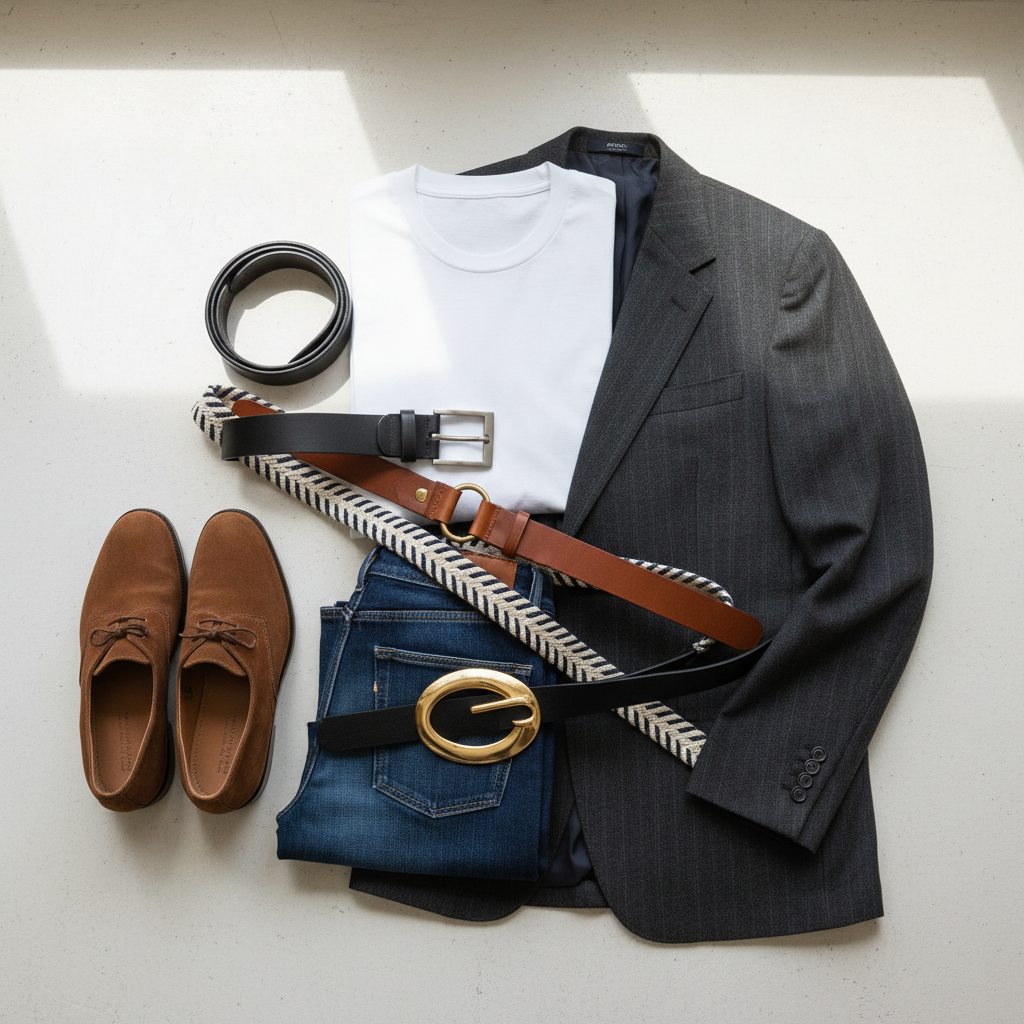
Why belts upgrade outfits (and why they sometimes don’t)
Belts look simple, but they change how the eye reads your body and your outfit. When they work, they add structure. When they don’t, they create a “hard line” in the wrong place.
- They control proportions: a belt creates a visual “break,” which can lengthen legs or define a waist depending on placement and color contrast.
- They add intention: even a basic tee and jeans looks more styled with a belt that matches the vibe of the outfit.
- They bring texture: smooth leather vs. suede vs. woven can make an outfit feel seasonal without changing the clothes.
- They signal formality: a sleek belt reads sharper than a braided or web belt, which reads relaxed.
Where people get stuck is contrast and bulk. A thick belt on a lightweight dress can feel heavy, and a high-contrast belt can cut the body in half, especially if the top and bottom colors already compete.
Quick self-check: what kind of belt does your outfit actually need?
Before you shop or swap, take 20 seconds and decide what you want the belt to do. That one choice makes belt styling outfits much easier.
- Need definition? (shirt dress, oversized blazer, boxy knit) Choose a belt that visually “belongs” at the waist.
- Need polish? (jeans + tee, work pants + blouse) Choose a leather belt with a clean buckle.
- Need balance? (wide-leg pants, long cardigan) Choose a belt color that doesn’t create a harsh break.
- Need personality? (simple monochrome look) Choose an interesting buckle or texture, keep everything else calm.
If you can’t answer what you’re trying to achieve, belts tend to feel random. That’s usually the real problem, not the belt itself.
The core rules of belt styling (that hold up in real outfits)
There are exceptions to every style “rule,” but these are the ones that keep you from wasting time in the mirror.
1) Match the outfit’s formality first, not the color
A casual outfit can look oddly stiff with a shiny, dressy belt. A suit can look underdone with a fabric web belt. Start with vibe, then worry about shades.
2) Control contrast at the waist
High contrast belts draw attention to the midsection. That can be great when you want definition, and not so great when you want a long, clean line.
- For a longer line: belt close to pants color (black belt on black trousers, tan on camel).
- For intentional definition: belt close to top color (a belt that “connects” visually to the top).
3) Buckle size should match your outfit scale
Big buckles pair better with denim, chunky knits, and casual layers. Small, minimal buckles suit tailoring, dresses, and sleek silhouettes.
4) Don’t over-coordinate accessories
“Matching” can look dated when it’s too perfect. A better target is harmony: similar undertone (warm vs. cool), similar level of shine, similar formality.
According to GQ... belt-and-shoe pairing is still a useful baseline for menswear, but many modern outfits look better when tones are coordinated rather than identical, especially with casual shoes and mixed materials.
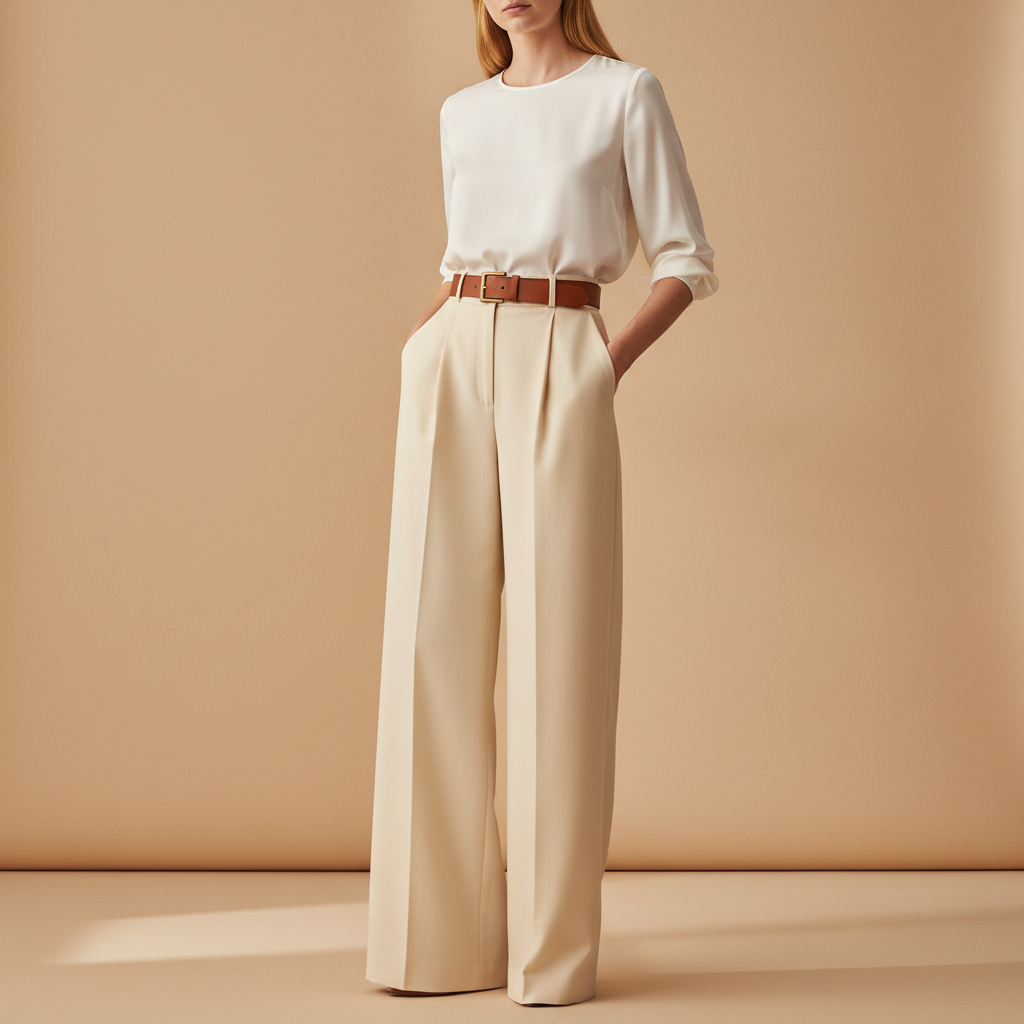
Outfit formulas: how to wear belts without guessing
If you want repeatable wins, use formulas. Once you find two or three that fit your lifestyle, belt styling outfits stops feeling like a “trick” and starts feeling automatic.
Jeans + tee (everyday casual)
- Go-to: medium leather belt, minimal buckle.
- If your outfit feels plain: swap to a textured belt (suede, woven) instead of adding more jewelry.
- Tip: half-tuck the tee, let the belt show but not dominate.
Trousers + blouse or knit (smart casual/work)
- Choose a slimmer belt, cleaner buckle, less contrast.
- Pair with loafers, mules, or low heels for a cohesive finish.
- If the waistband is bulky: skip belt loops and use a waist-defining belt over a knit only if the knit has enough structure.
Blazer + denim (polished but not formal)
- Let the belt echo the blazer’s structure: leather, not braided.
- If you carry a bag, aim for similar hardware tone (gold with gold, silver with silver) when it’s easy.
Dresses (the “where does the belt go?” problem)
- Shirt dress: belt at natural waist, buckle centered, keep it simple.
- Sweater dress: wide belt can work, but only if the knit is substantial; otherwise it bunches.
- Slip dress: thin belt can look intentional, but keep contrast low unless you want a strong waist emphasis.
Pick the right belt: a simple table you can screenshot
If you’re building a small belt wardrobe, you don’t need ten. You need a few that cover different levels of formality and texture.
| Outfit situation | Belt type that usually works | What to avoid |
|---|---|---|
| Jeans + casual top | Medium leather, suede, woven | Very glossy dress belt with tiny buckle |
| Office trousers + blouse | Slim to medium leather, minimal buckle | Oversized buckle that steals attention |
| Monochrome outfit | Same-color belt or subtle texture | High-contrast belt that “cuts” the look in half |
| Dress or long layers | Wide belt only if fabric supports it | Stiff thick belt on thin, floaty fabric |
| Weekend athleisure | Web/utility belt (if loops allow) | Formal leather belt that feels out of place |
Practical steps: style a belt in under 3 minutes
This is the part most people skip, then wonder why the belt “doesn’t look like the photo.” These little adjustments matter.
- Step 1: decide the focal point—waist definition, leg length, or a pop of texture.
- Step 2: choose contrast level—low contrast for elongation, medium for balance, high for emphasis.
- Step 3: fix the tuck—full tuck reads sharper, half-tuck reads relaxed, no tuck often hides the point of the belt.
- Step 4: check the back view—twists and bunching show up from behind, especially with knits and dresses.
- Step 5: set hardware tone—if you wear visible jewelry, keep metals in the same family when possible.
Key takeaway: if the belt feels “off,” it’s often the tuck, the contrast, or buckle scale, not your body or the whole outfit.
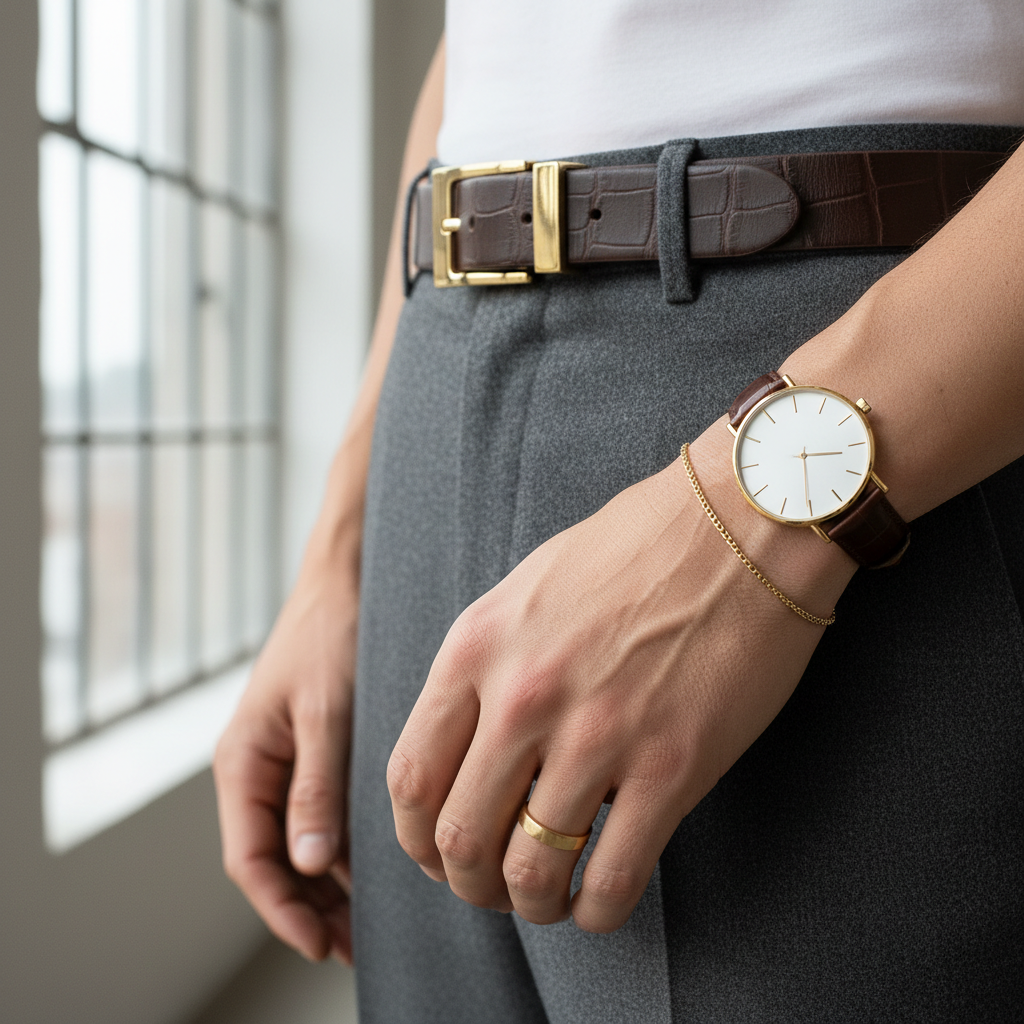
Common mistakes that make a belt look awkward
A belt can make an outfit look cheaper when it fights the rest of the styling. These are the repeat offenders.
- Too much happening at the waist: paperbag waist + belt + bulky tuck often looks crowded.
- Wrong width for the loops: a too-thin belt in wide loops looks like a mismatch, even if the color is perfect.
- Cheap shine in bright light: overly glossy faux leather can stand out in photos; matte finishes tend to look more expensive.
- Over-tightening: a belt that pulls fabric creates puckers and draws attention to the closure area.
- Forgetting the shoe vibe: a refined belt with beat-up sneakers can work, but it’s a deliberate contrast; if it’s accidental, it reads messy.
According to Vogue... modern accessorizing often focuses on proportion and styling intention over strict matching, which is why “perfect sets” can feel less current than thoughtful mix-and-match.
When it’s worth getting help (tailor, stylist, or just a second opinion)
If belts always feel wrong, sometimes it’s not styling, it’s fit. A tailor can adjust waistbands, add belt loops, or improve how trousers sit so a belt doesn’t do all the work.
- If your pants slide even with a belt, a waistband adjustment may help more than buying another belt.
- If dresses bunch badly under a belt, a stylist or tailor can suggest better layering pieces or subtle shaping.
- If you have discomfort or skin irritation where belts sit, switching materials or adjusting fit may help, and persistent irritation is worth discussing with a healthcare professional.
Conclusion: make belts do one job at a time
The easiest way to improve belt styling outfits is to stop treating belts as decoration and start using them as a tool: definition, polish, balance, or personality, pick one per outfit and you’ll get cleaner results.
If you want an immediate upgrade, try this: take your most-worn jeans outfit, add a medium leather belt with a simple buckle, then adjust the tuck until the waistline looks intentional. Small change, big payoff.
FAQ
How do I style a belt without looking like I’m cutting my body in half?
Keep contrast low by choosing a belt close to your pants or dress color, then avoid bulky tucks. A subtle break reads longer and cleaner in most mirrors and photos.
What belt width is most versatile for everyday outfits?
A medium-width belt tends to work across denim and casual trousers because it fits most belt loops and doesn’t overwhelm outfits, while still looking substantial.
Do my belt and shoes have to match exactly?
Not usually. Exact matching can look forced in casual looks, so aim for similar undertone and formality, like matte brown leather with other warm-toned accessories.
How do I wear a belt with a dress that has no belt loops?
Use a belt only if the fabric has enough structure to hold it in place, then position it at your natural waist. With slippery fabrics, a belt can slide and bunch, so a different styling approach may look better.
What’s the easiest way to make a belt look more modern?
Choose a cleaner buckle and avoid overly shiny materials, then coordinate hardware tone with your watch or jewelry when it’s visible. The effect is subtle but noticeable.
Why does my belt buckle sit off-center?
It’s often belt length or uneven tension through the loops. Try a shorter size, re-thread the belt through the loops carefully, or choose a belt with a stiffer strap.
Can belts work with oversized outfits?
Yes, but they work best when the outfit has shape somewhere else too, like structured shoulders or a defined pant waist. If everything is oversized and soft, belts can create bunching instead of structure.
If you’re building outfits for work, travel, or everyday errands and you want a more “put together” look without buying a whole new wardrobe, start by rotating belts across your most-worn outfits and note which combinations feel natural, that small feedback loop makes styling faster each week.