
Casual chic outfit formula is the quickest way to stop overthinking outfits and still look put-together for real life, errands, casual workdays, dinners, and travel. If your closet is full but you still feel like you “have nothing to wear,” it’s usually not a shopping problem, it’s a repeatable styling problem.
The good news is casual chic is less about chasing trends and more about a few reliable building blocks, clean proportions, and one intentional “polish” element. Once you learn the pattern, you can remix it with what you already own and get consistent results.
People often mistake “casual chic” for “dressy,” then end up uncomfortable, or they go too casual and feel underdressed. This guide keeps it practical, with a simple formula, a quick self-check, and ready-to-use outfit templates.
What “casual chic” really means (and what it doesn’t)
Casual chic sits in the middle: relaxed basics, but finished on purpose. Think clean lines, decent fabrics, and styling choices that look intentional, even if the pieces are simple.
It usually looks like: a classic base (tee, knit, denim, trousers), one structured layer (blazer, trench, crisp shirt), and refined accessories (sleek shoe, simple jewelry, tidy bag).
- Not overly formal: stilettos, heavy sparkle, fussy silhouettes tend to fight the “casual” part.
- Not sloppy: stretched tees, overly distressed denim, worn-out sneakers can drag the look down.
- Not trend-dependent: you can update with one trend piece, but the foundation stays classic.
According to Vogue, strong personal style often comes from repeatable outfit ideas built around wardrobe staples rather than constant trend-chasing, which is exactly what this approach leans on.
The casual chic outfit formula (easy version you can repeat)
Here’s the repeatable structure that makes outfits feel “done” without feeling dressed up. Use it like a template, then swap pieces based on weather and occasion.
The 3-2-1 formula
- 3 basics: a top + a bottom + a layering piece (or dress + layer)
- 2 polish choices: silhouette/proportion + color palette (keep both simple)
- 1 elevated detail: shoe, bag, belt, jewelry, or outerwear that upgrades the whole look
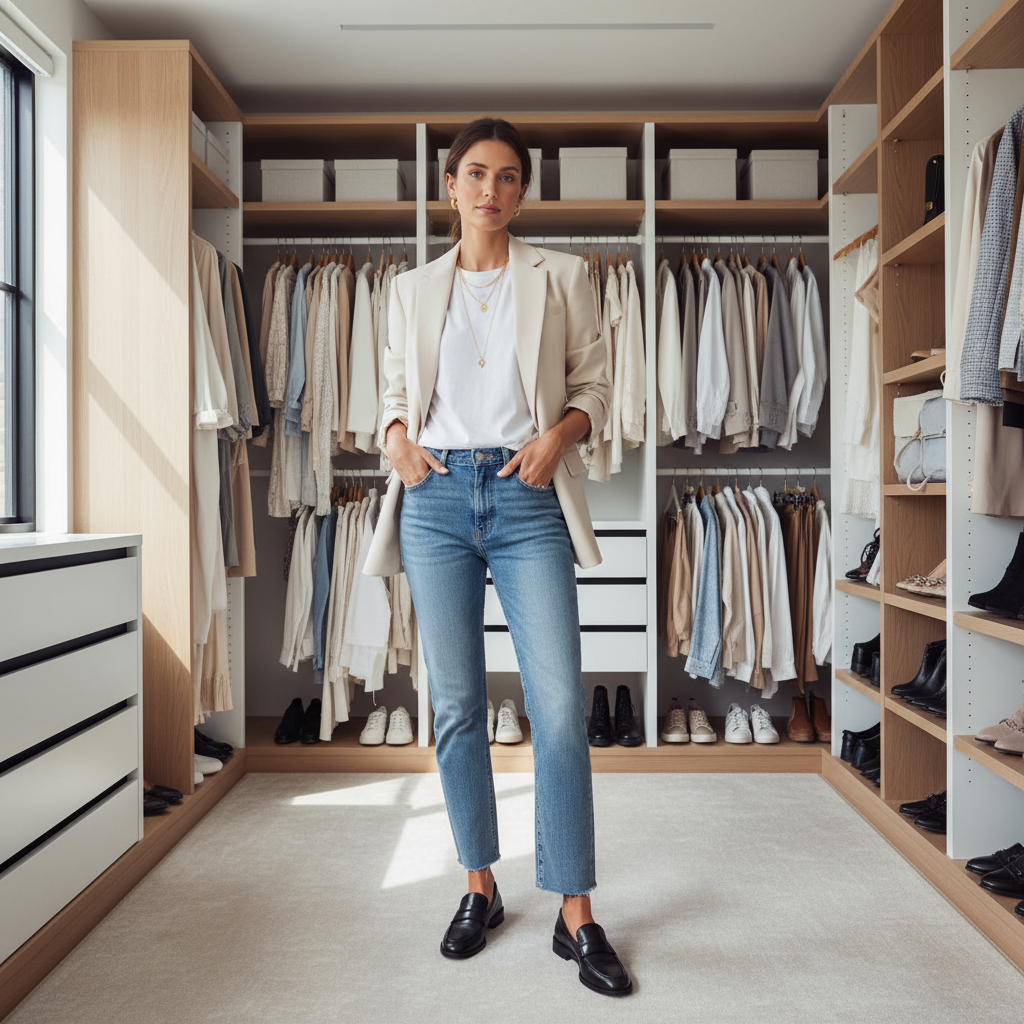
A simple example: white tee + straight jeans + blazer, keep colors neutral, add a leather loafer as the elevated detail.
Why outfits miss the mark: the common “almost chic” traps
Most “I look fine but not chic” moments come down to a handful of fixable issues, not a lack of good clothes.
- Too many relaxed items at once: hoodie + joggers + running shoes can look like you gave up, even if it’s cute.
- No structure anywhere: unstructured knits and drapey layers need one crisp item to balance them.
- Busy color story: mixing many strong colors or prints can read chaotic instead of effortless.
- Wrong shoe for the vibe: shoes signal formality fast, a sleek sneaker differs from a gym sneaker.
- Fit and hem issues: bunching sleeves, extra-long inseams, or gaping waistbands quietly ruin polish.
If you fix just one of these, the casual chic outfit formula starts working almost immediately.
Quick self-check: which “casual chic” type are you dressing for?
Before you build outfits, identify the situation you dress for most. This prevents buying random pieces that don’t match your real calendar.
- Casual office / hybrid work: need tidy layers and shoes that look professional on camera and in person.
- Weekend errands + coffee: want comfort with one “upgrade” so you still feel sharp.
- Date night (not formal): need a flattering silhouette plus one standout detail.
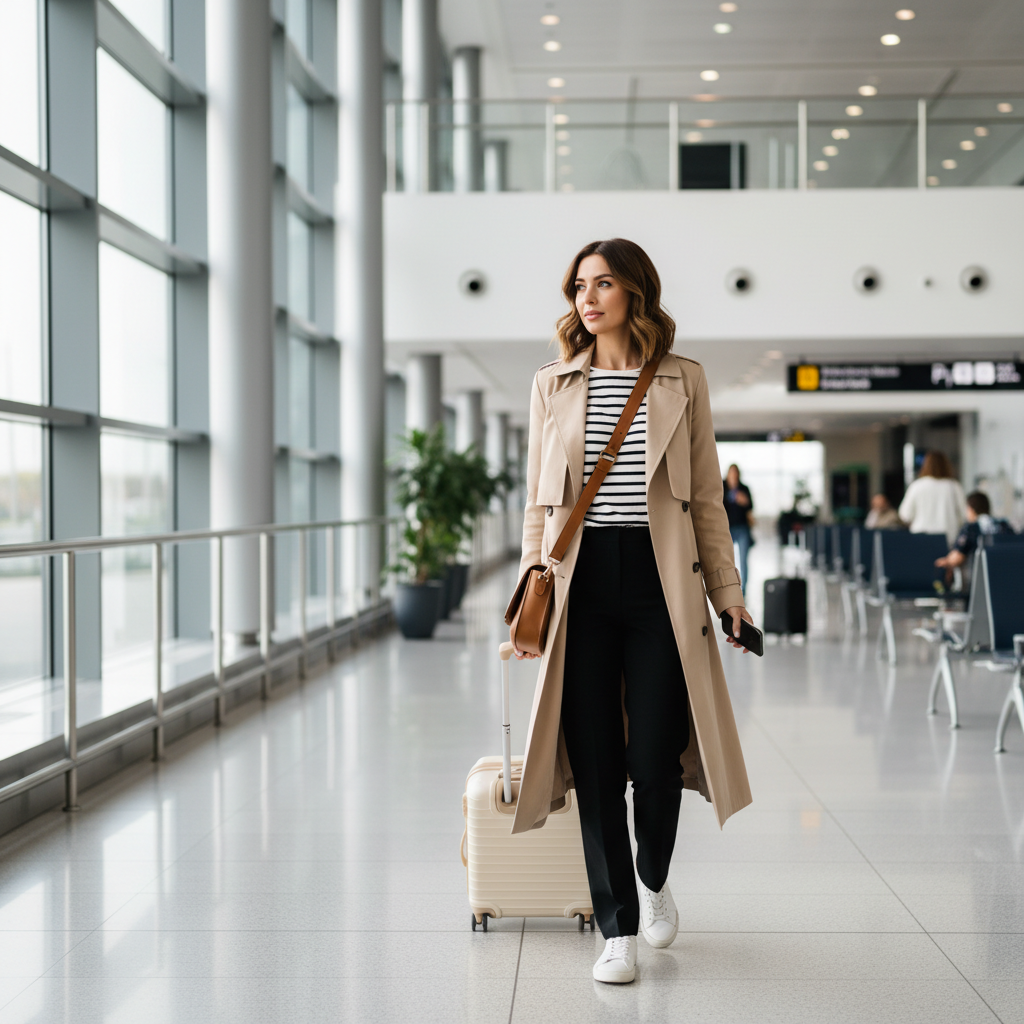
- Travel days: need comfort, pockets, layers, and shoes that handle walking.
Fast test: If your outfit has two relaxed elements (like denim + sneakers), add one structured piece (like a blazer) or one sleek accessory (like a belt bag in leather). That’s the pivot into casual chic.
Outfit templates you can copy (with simple swaps)
These are meant to be “grab-and-go.” Start with one template that fits your life, then repeat it with different colors or textures.
Template 1: The blazer sandwich
- Base: fitted tee or thin knit
- Bottom: straight jeans or tailored trousers
- Layer: blazer
- Elevated detail: loafers, ankle boots, or a sleek sneaker
Template 2: The crisp shirt upgrade
- Base: button-down (white, stripe, light blue)
- Bottom: denim, wide-leg trousers, or a midi skirt
- Polish: French tuck + belt
- Elevated detail: structured tote or small shoulder bag
Template 3: The elevated set
- Base: knit set, matching top and bottom, or coordinated separates
- Layer: trench, long coat, or denim jacket with structure
- Elevated detail: minimal jewelry and a clean sneaker
Template 4: The easy dress + jacket
- Base: midi dress (solid color works hardest)
- Layer: cropped jacket, blazer, or leather jacket
- Elevated detail: heeled boot, ballet flat, or refined sandal
A practical shopping and closet plan (so you don’t buy “almost right” pieces)
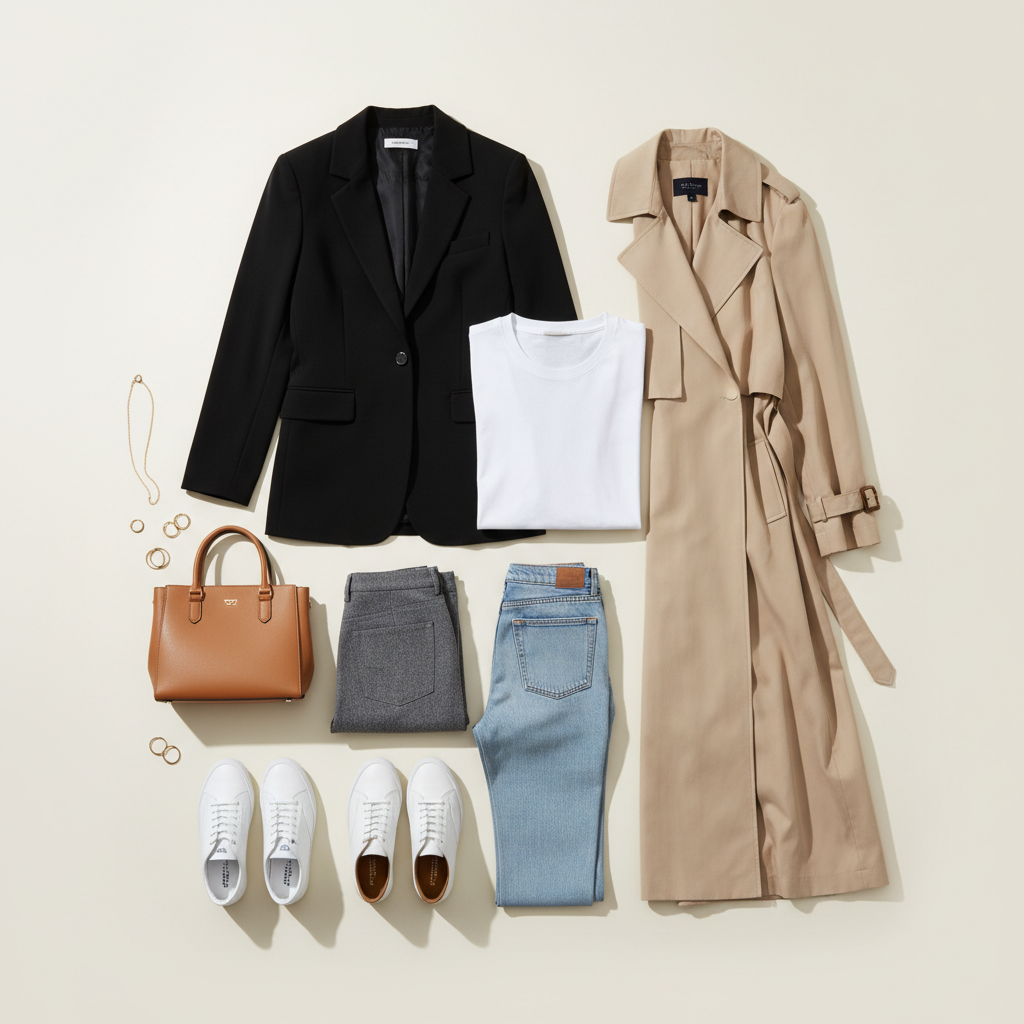
Use this table to build a small core that supports the casual chic outfit formula. You don’t need every item, but you do want coverage across “base, layer, shoe, bag.”
| Category | Casual option | Chic upgrade | When to use |
|---|---|---|---|
| Top | Quality tee, fine knit | Crisp button-down, silk-like blouse | Work, dinners, photos |
| Bottom | Straight jeans, dark denim | Tailored trousers, satin midi skirt | Office, smart weekends |
| Layer | Denim jacket, cardigan | Blazer, trench coat | Instant polish, travel |
| Shoes | Clean sneaker | Loafer, ankle boot, refined flat | Where you need “adult” energy |
| Accessories | Tote, simple studs | Leather belt, structured bag | Finishing touch, waist definition |
Key point: if your closet skews casual, invest in layers and shoes; they change the vibe faster than buying more tops.
Execution tips that make the formula look intentional
This is where casual chic gets real. The pieces can be basic, but the finish can’t look accidental.
- Keep a tight color palette: monochrome, neutrals, or two main colors plus one accent reads clean.
- Mind proportions: wide-leg bottoms pair well with a fitted top or cropped layer; slim bottoms can handle an oversized layer.
- Upgrade your “third piece”: blazer, trench, leather jacket, or crisp shirt worn open often does more than jewelry.
- Choose one focal point: statement shoe, bold bag, or strong silhouette, avoid competing “stars.”
- Grooming matters: neat hair, steamed shirt, clean shoes quietly carry the look.
According to Good Housekeeping, small styling details like fit, color coordination, and accessorizing can noticeably elevate simple outfits, which matches what most stylists emphasize in practice.
Conclusion: a simple way to stop outfit stress
If you want a reliable look without playing dress-up, stick to the casual chic outfit formula: solid basics, one structured layer, and one elevated detail. That combination handles most American day-to-day situations, and it’s flexible enough to match your comfort level.
Action step: pick one template above and build two versions, one in neutrals and one with a single accent color, then take mirror photos so you can repeat what works without rethinking everything.
FAQ
What is a casual chic outfit formula in plain terms?
It’s a repeatable outfit template that combines comfortable basics with one structured piece and one “polish” detail, so you look intentional without being overdressed.
Can sneakers be casual chic?
Yes, in many cases, but they need to look clean and streamlined. A minimalist leather sneaker usually reads more chic than a bulky running shoe.
How do I look casual chic in hot weather?
Lean on breathable structure: a crisp linen shirt, tailored shorts that fit well, a simple tank, and a refined sandal. Keep colors simple and fabrics looking fresh.
Is casual chic appropriate for a business casual office?
Often, yes, especially in modern offices, but the “chic” part should do more work: blazer, trousers, closed-toe shoes, and fewer sporty elements.
What’s the fastest item to buy to look more chic?
A structured layer (blazer or trench) or an upgraded shoe (loafer/ankle boot) tends to change the overall vibe faster than another top.
How do I make jeans look casual chic?
Choose a straighter, darker wash, avoid heavy distressing, add a belt, then pair with a crisp shirt or blazer and a sleeker shoe.
How many colors should a casual chic outfit have?
Two main colors plus one accent is a safe ceiling if you want it to feel effortless. Monochrome also works well when you want instant polish.
If you’re trying to build a casual chic wardrobe without buying a bunch of “maybe” pieces, a simple closet audit and a short shopping list based on your real weekly routine can save time and regret, and it also makes outfit planning feel a lot less personal.