
Plus size fashion tips work best when they start with one truth: flattering has more to do with fit, proportion, and comfort than with hiding your body.
If you have ever tried on ten outfits and still felt “off,” you are not alone, a lot of the frustration comes from inconsistent sizing, fabrics that behave differently on curves, and styling advice that assumes everyone has the same proportions.
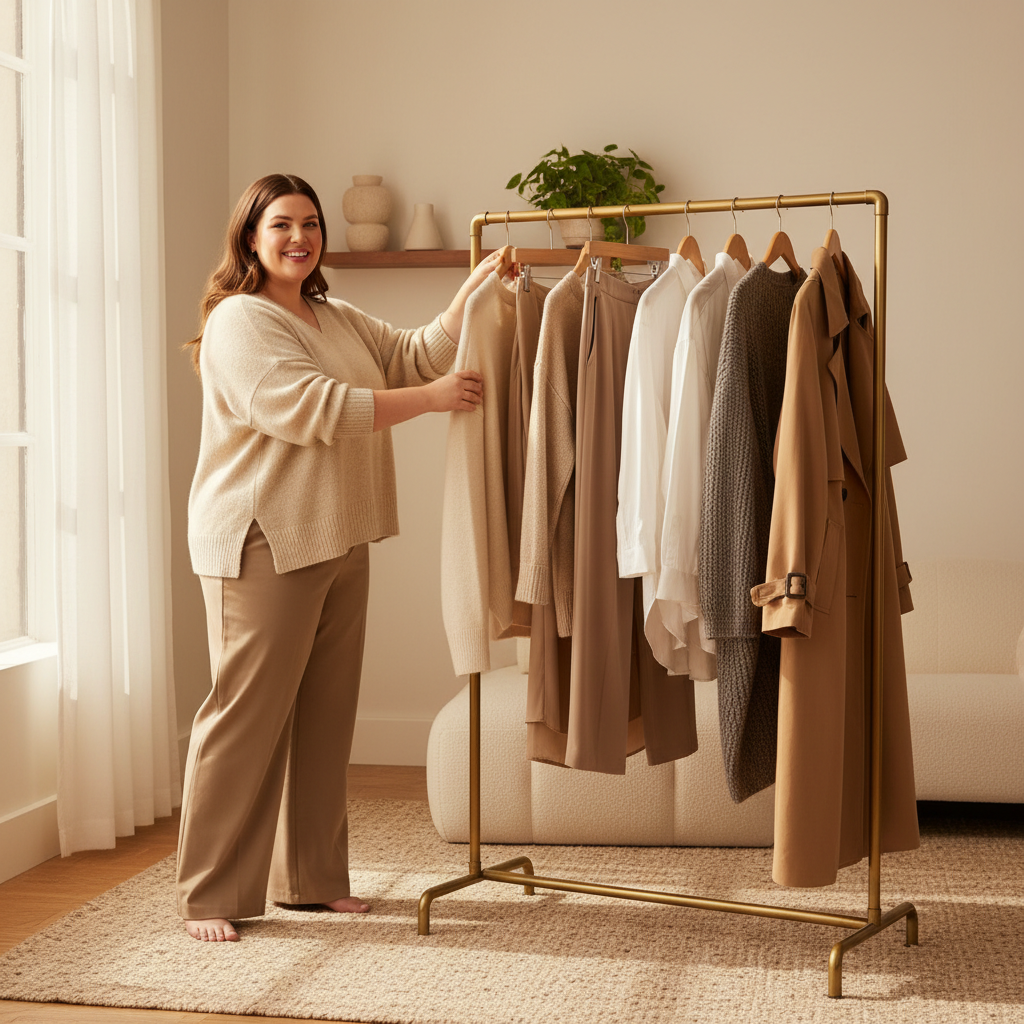
This guide keeps it practical, how to spot a good fit in under a minute, a few outfit formulas that repeat well, and what to tweak when you like the outfit but not the way it sits on your body.
Start with fit, not the size on the tag
The fastest way to level up your closet is to treat the label as a starting point, not a verdict. Brands grade patterns differently, and plus ranges can vary even within the same retailer.
According to National Institute of Standards and Technology (NIST), there is no single U.S. standard that forces apparel brands to use identical sizing, which helps explain why “the same size” can feel wildly different across stores.
- Shoulders and bust first: if those areas strain or pull, sizing up and tailoring usually looks cleaner than forcing it.
- Waist placement matters: high-rise hits higher than you expect, mid-rise can feel “safer” but sometimes cuts in at the widest point.
- Hems are negotiable: pant and sleeve length changes often make an outfit look custom without changing your size.
Real talk, most “unflattering” outfits are just a little too tight in one spot and a little too loose in another, that’s a fit issue, not a body issue.
Proportion tricks that look natural, not costume-y
When people ask for plus size fashion tips, they often mean “how do I look balanced.” Balance comes from where the eye lands, your outfit can do that without extreme shaping.
Use the 1–2 focal-point rule
Pick one or two places to draw attention, then let everything else support it, for example: a great neckline plus a defined waist, or statement earrings plus a sleek column outfit.
- Define the waist lightly: wrap tops, belts over knit dresses, or a half-tuck can suggest shape without squeezing.
- Create clean vertical lines: longline layers, open button-downs, or matching top-and-bottom colors help lengthen visually.
- Mind the “cut line”: where a jacket ends changes the vibe, cropped can highlight waist, hip-length can smooth the midsection, longer can elongate.
Necklines that usually photograph well
- V-neck and scoop neck for an open chest line
- Square neck for structure and a lifted look
- Mock neck when the fabric drapes, not clings
If you only change one thing, change where your top ends, a top that ends at your natural waist often makes outfits feel intentional.
A quick self-check: which fit problem is it?
Before buying more pieces, diagnose the issue you see in the mirror. These checks take less than two minutes and save a lot of returns.
- Riding up: usually needs more room at hips or bust, or a longer torso length in the pattern.
- Pulling lines: diagonal wrinkles across bust or hips often mean the garment is too small in that area.
- Baggy but still uncomfortable: fabric may be stiff, or the waist is too tight while other areas are oversized.
- Gapping at buttons: size up, or choose styles with hidden plackets, stretch panels, or better bust shaping.
- Waistband rolling: rise is wrong for your torso, or the elastic quality is weak.
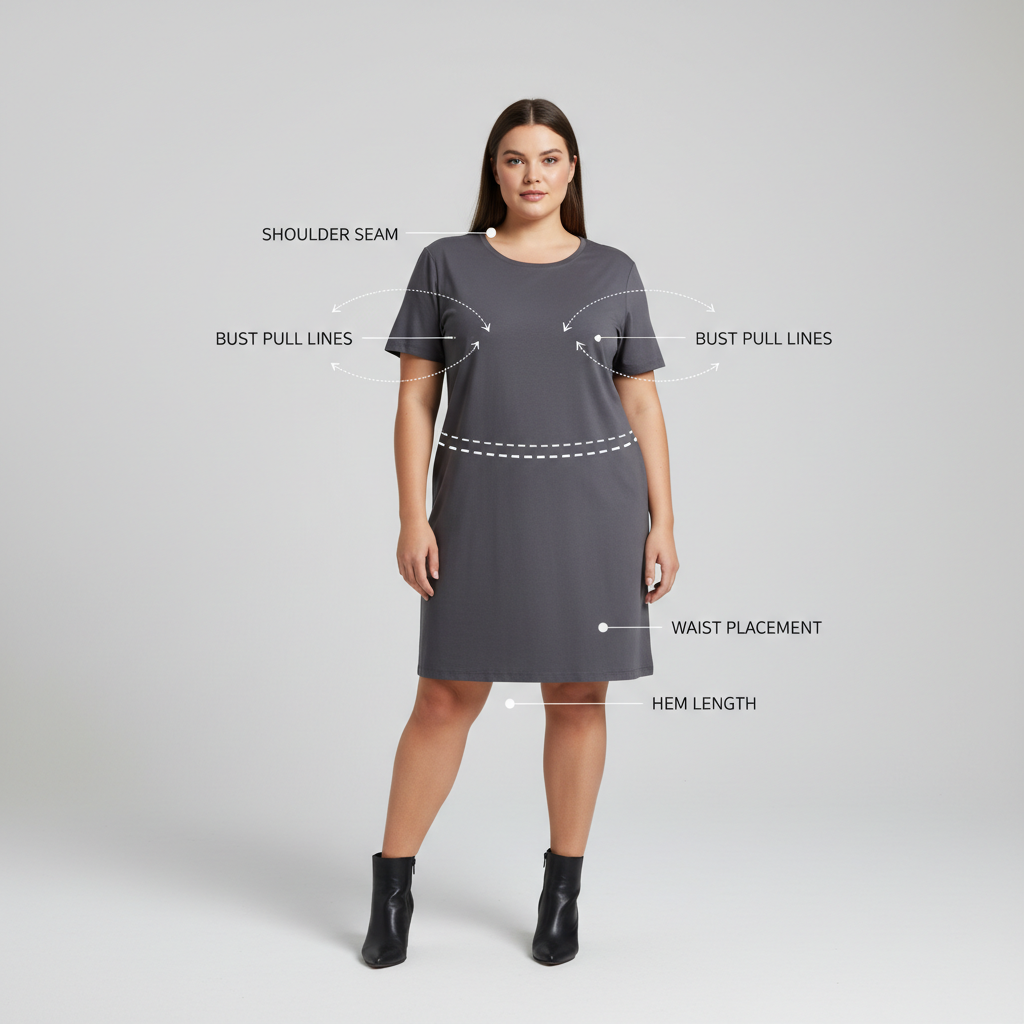
Once you name the problem, solutions get obvious, and you stop blaming yourself for something that is really pattern math.
Outfit formulas you can repeat all year
You do not need endless variety to look stylish, you need a few formulas that fit your life and repeat without looking repetitive.
Formula 1: fitted top + relaxed bottom + sharp shoe
- Ribbed tee or bodysuit
- Wide-leg jeans or tailored trousers
- Loafer, ankle boot, or clean sneaker
Formula 2: easy dress + third piece
- Wrap, fit-and-flare, or knit midi
- Denim jacket, blazer, or long cardigan worn open
- One standout accessory, earrings or bag
Formula 3: monochrome column + texture
- Same-color top and bottom, black, navy, cream, olive
- Add texture: leather belt, denim jacket, chunky knit, satin skirt
These plus size fashion tips are “quiet” on purpose, they give you structure, then you can personalize with color, print, or trend pieces.
What to buy first: a small closet checklist
If your closet feels chaotic, build a base that makes outfits easy, then sprinkle in personality. Here is a realistic starter list that works for many body shapes.
- Bottoms: one dark straight jean, one wide-leg trouser, one casual short or skirt you actually wear
- Tops: two great tees, one elevated blouse, one layering tank with good straps
- Layers: a blazer or structured jacket, plus a softer cardigan or shacket
- Dresses: one go-to day dress and one “plans” dress
- Shoes: a comfortable everyday pair plus one dressier option
Key point: prioritize fabrics that recover, knits that bounce back, denim with a bit of stretch, and woven fabrics that skim rather than cling.
Fabric, color, and prints: what usually works in real life
People overthink color and underthink fabric. In many cases, fabric weight determines whether something drapes nicely or shows every underlayer line.
- Heavier knits: smoother lines, less cling, often better for dresses and skirts.
- Stretch wovens: look polished, feel easier on the waist and hips.
- Thin jersey: comfy but can highlight texture, consider layering or choosing a thicker version.
Prints do not have rules, but scale matters, tiny prints can look busy on larger surfaces, while medium-to-large prints often read cleaner. If you love a bold print, keep the rest of the outfit simple and let it be the focal point.
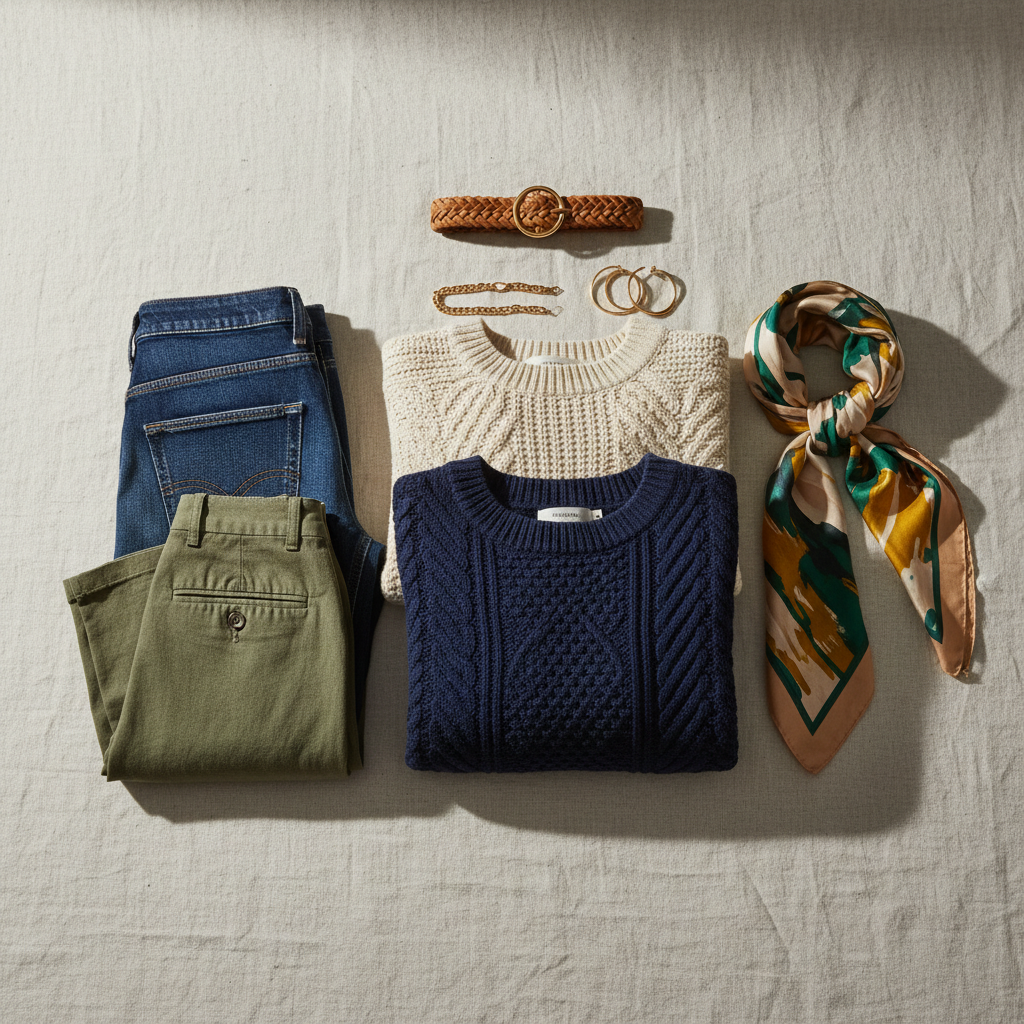
If you want a low-effort trick, pick two core neutrals you like on you, then add one accent color, it makes shopping easier and outfits look coordinated without trying hard.
Shapewear, bras, and comfort: the support layer matters
Support garments are optional, but they can change how clothes sit. The goal is comfort and smoother fit, not compression you dread wearing.
- Bras: a good band fit matters more than cup size, if straps dig, the band may be too loose. Consider a professional fitting if you are unsure.
- Shapewear: choose targeted pieces, like shorts to prevent chafing or a smoothing brief, instead of ultra-firm full-body options.
- Undergarment lines: seam placement and fabric thickness often fix this better than sizing down.
If you experience pain, numbness, or breathing discomfort, that is a sign to size up or switch styles, and if you have medical concerns, it is smarter to ask a qualified professional.
A simple table: quick fixes for common outfit issues
| Problem you notice | Likely cause | Quick fix |
|---|---|---|
| Top clings at stomach | Fabric too thin or cut too straight | Choose heavier knit, add open layer, try a slightly boxier cut |
| Pants gap at waist | Waist-to-hip ratio mismatch | Try curvy fit, add belt, tailor waistband |
| Dress rides up when walking | Not enough room at hips or thighs | Size up, pick a different silhouette, add slip shorts |
| Blazer feels stiff and bulky | Shoulder too narrow or lining too rigid | Look for stretch lining, size for shoulders, tailor sleeves |
| Outfit looks “choppy” | Too many horizontal breaks | Monochrome base, longer layer, similar color shoes |
Common mistakes that waste money (and confidence)
Some advice sounds helpful but backfires, especially when you are trying to build outfits fast.
- Buying a size down “for motivation”: it usually turns into closet clutter and self-blame.
- Assuming black fixes everything: black can look sharp, but fit still shows, and head-to-toe black without texture can feel flat.
- Ignoring tailoring: small alterations often cost less than replacing the item, and they make basics look premium.
- Chasing every trend: trends work when they match your proportions and lifestyle, not when they fight them.
When in doubt, take a photo, mirror views can be misleading, a quick front-and-side photo tells you where the lines actually sit.
When it makes sense to get extra help
If shopping consistently feels exhausting, you might benefit from a professional bra fitting, a tailor, or a stylist who understands plus sizing. That is not a luxury move, it can be a practical one when returns pile up.
- If you have frequent fit issues in the same area, a tailor can confirm whether it is a pattern mismatch or a sizing problem.
- If you are rebuilding after body changes, a stylist can help you pick silhouettes that fit your current life and comfort level.
- If you have sensory needs, pain, or skin irritation, consider asking a healthcare professional for guidance on supportive garments.
Conclusion: make “flattering” mean wearable and you
The most useful plus size fashion tips are the ones you can repeat on a Monday morning, focus on fit, build a few formulas, and adjust proportions with small choices like hem length and layer placement.
This week, pick one outfit you already own, change just one variable, the shoe, the layer, or the waist definition, then take a photo so you can see what actually improved.
FAQ
What are the easiest plus size fashion tips for looking more polished?
Start with clean fit at shoulders and bust, then add one structured piece like a blazer or denim jacket. Polished usually reads as intentional lines, not “dressy” items.
How do I find jeans that do not gap at the waist?
Look for “curvy” cuts, higher rises, or jeans with a contoured waistband. If the fit is great everywhere else, a small waistband alteration often solves it better than endless brand hopping.
Do I need shapewear to look flattering in dresses?
No, but it can help with comfort and how fabric drapes. Many people prefer light smoothing shorts for chafing rather than firm compression, especially for long wear.
What tops look best if I carry weight in my midsection?
Tops that skim, not cling, tend to feel better, think heavier knits, wrap styles, or relaxed shapes with a slight waist suggestion. Avoiding very thin jersey can make a big difference.
How can I wear crop jackets as a plus size person?
Pair a cropped jacket with a higher rise bottom or a dress with a defined waist area, so the “end point” lands at a flattering spot. The goal is proportion, not showing skin.
What shoes balance wide-leg pants?
A shoe with some visual weight, like a loafer, sneaker, or block-heel boot, often balances the volume. Pointed toes can also elongate, but comfort matters more for daily wear.
How many basics should I buy before adding trends?
Enough to build three repeatable outfits for your actual week. Once you can rotate those without stress, trends become fun instead of expensive experiments.
If you are building a closet from scratch or you keep buying pieces that “should” work but never get worn, it may help to map your top three outfit needs and shop around those, you will spend less energy and end up with outfits you actually reach for.