
Trench coat spring looks are easy to picture and strangely hard to execute when you’re standing in front of a closet that feels half-winter, half-summer.
The trench has “classic” baked in, but classic can slide into plain if the layers feel too safe, or into awkward if proportions fight each other. The good news, you rarely need new pieces, you usually need a clearer formula.
Below you’ll find a set of outfit ideas that hold up in real spring weather, plus a quick checklist to match the look to your climate, commute, and weekend plans. I’ll also point out the small styling moves that make a trench feel intentional, not like a default jacket you grabbed on the way out.
Why trench coats work so well in spring (and where people get stuck)
A trench coat earns its place because it solves multiple spring problems at once, light rain, temperature swings, and outfits that look unfinished without a top layer.
Where most people get stuck is the middle zone, it’s not cold enough for chunky knits, not warm enough for bare arms, and the trench can look stiff if everything underneath is equally structured.
- Proportion mismatch: wide-leg pants plus a long trench can feel heavy if the footwear is also bulky.
- Wrong layer weight: thick hoodies bunch under sleeves, thin tanks can feel too bare when the coat opens.
- Color imbalance: beige-on-beige is elegant, but without texture contrast it can read flat.
- Over-accessorizing: scarves, hats, and big bags can compete with the trench’s lapels and belt.
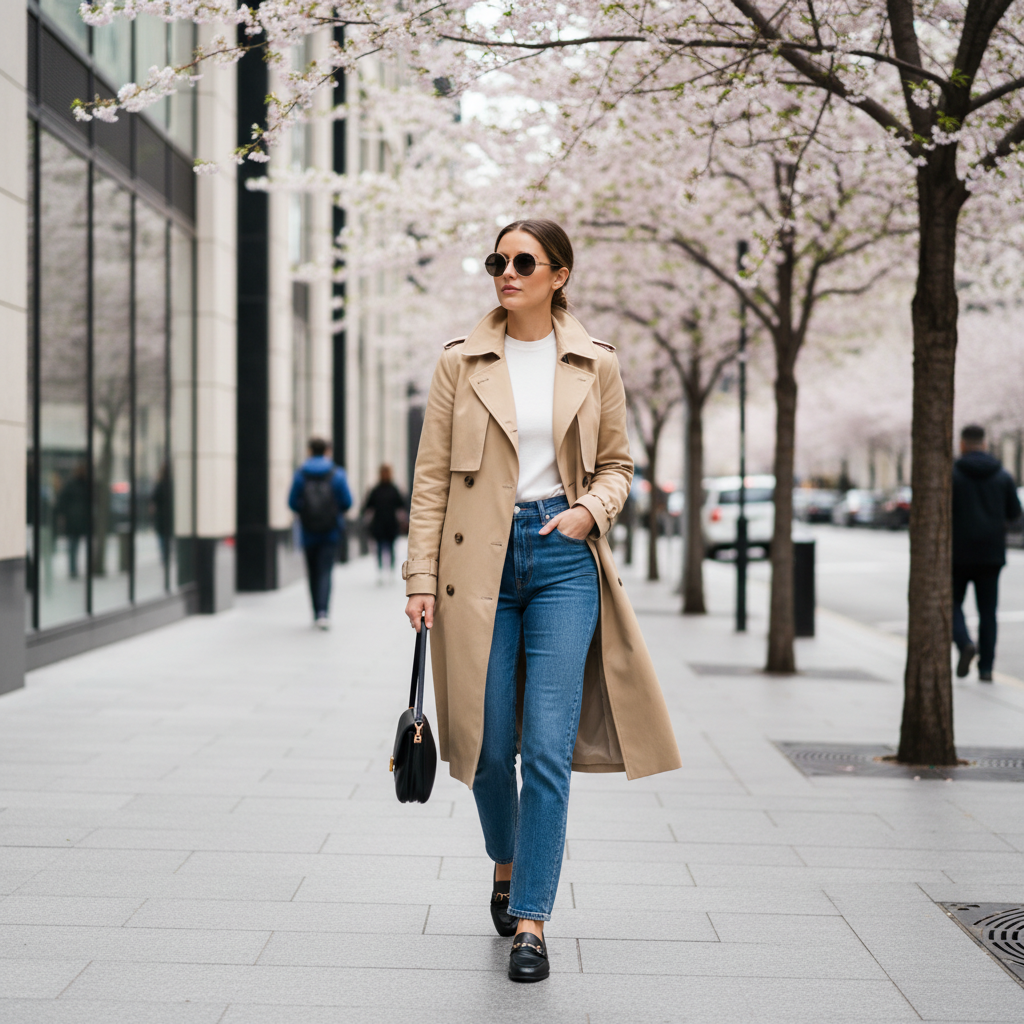
Quick self-check: which trench coat spring look fits your day?
Before you copy an outfit photo, decide what your day actually demands. This saves you from “looks cute, feels wrong” syndrome.
- Weather: Is it breezy, rainy, humid, or just sunny and cool?
- Walking time: 10 minutes total or a full-day errand run?
- Indoor temperature: Office AC can feel like winter in April.
- Vibe: polished, relaxed, or somewhere in between?
If you want a fast match, use this:
| Situation | Best base outfit | Shoe direction | One detail that helps |
|---|---|---|---|
| Rainy commute | Breton tee + straight jeans | Water-resistant ankle boots | Keep belt tied, not buckled |
| Office day | Fine knit + tailored pants | Loafers or low heel | Structured tote to balance |
| Weekend casual | White tee + relaxed denim | Sneakers | Roll sleeves once, show wrist |
| Date night | Slip skirt + fitted top | Sleek flats or heel | Drape trench on shoulders |
Classic outfit formulas that rarely fail
When people say “classic trench,” they often mean a beige double-breasted trench with a belt. The trick is giving it a simple base that still has contrast in shape or texture.
1) Trench + white tee + straight jeans (the reliable default)
This is the easiest version of trench coat spring looks, and it works because the trench supplies polish while denim keeps it grounded.
- Pick jeans with a clean hem or a tidy cuff, too much stacking makes the outfit look heavy.
- Add loafers, ballet flats, or crisp sneakers depending on your day.
- Choose a bag that matches your intent, tote for work, crossbody for errands.
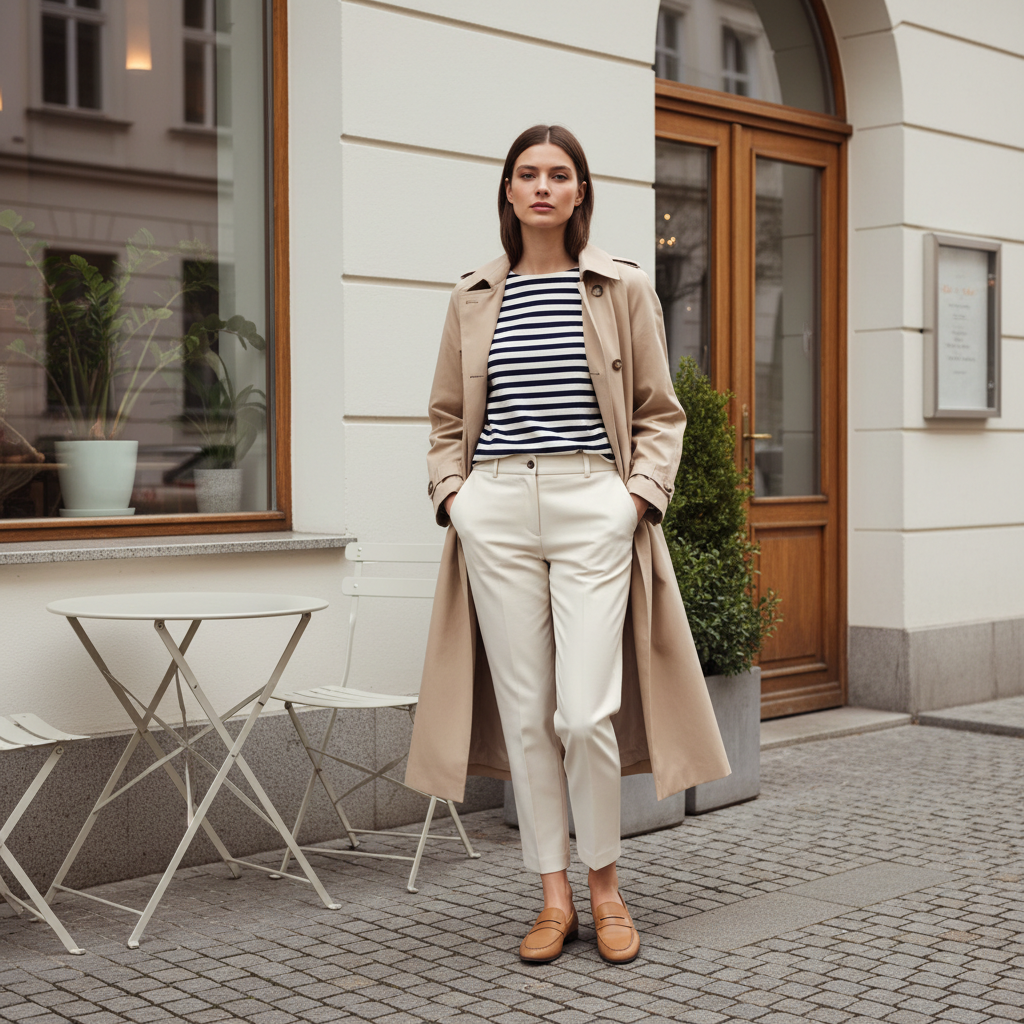
2) Trench + striped top + cropped pants (Paris-adjacent, not costume)
A Breton stripe is classic for a reason, but keep the rest quiet, one stripe piece is enough.
- Cropped trousers or ankle-length jeans show footwear, which lightens the long coat.
- Gold hoops or a simple watch reads intentional without feeling “styled.”
3) Trench + light knit + midi skirt (for windy spring days)
This combo looks soft but holds up when wind hits. Keep the knit thin, you want drape, not bulk under the coat.
- Ribbed tees, fine-gauge sweaters, and lightweight cardigans behave well under sleeves.
- For the skirt, satin, pleats, or a clean A-line all work, choose what moves easily.
- Pointed flats sharpen it, sneakers relax it.
4) Trench + monochrome base (the “expensive” shortcut)
Monochrome dressing does not require designer anything, it just needs consistent tones. Try black base layers with a camel trench, or cream-on-cream with a slightly darker coat.
- Mix textures so it doesn’t look flat, denim plus cotton, knit plus satin, matte plus a little shine.
- If you add color, make it small, lipstick, scarf, or a single bright bag.
How to tweak trench styling for your body proportions
This is where “same trench, different results” happens. Small adjustments change the whole silhouette.
- If you feel swallowed by the coat: push sleeves up to mid-forearm, wear a shoe with a cleaner toe, and keep the hemline below the knee or above mid-calf rather than exactly at the widest calf point.
- If you look boxy when it’s open: choose a slimmer base, like a fitted tee or tank with a cardigan, and add a crossbody strap diagonally for shape.
- If belting feels fussy: tie the belt in a loose knot instead of buckling, it gives shape without that “trenched in” stiffness.
- If you’re petite: consider wearing the trench open with a higher waist pant, or hem/cuff pants to show ankle.
According to The Metropolitan Museum of Art (The Met), trench coats evolved from functional outerwear into a fashion staple over time, which is a helpful reminder: it’s meant to move with you, not sit perfectly still like a display piece.
Practical spring layering: warmth without bulk
Most spring frustration comes from layering that fights the trench’s structure. Keep layers smooth, thin, and breathable.
- Best under-layers: cotton tees, lightweight knits, button-downs, thin hoodies, fine turtlenecks on chilly mornings.
- Skip when possible: thick fleece, oversized shoulder seams, very chunky scarves that compete with lapels.
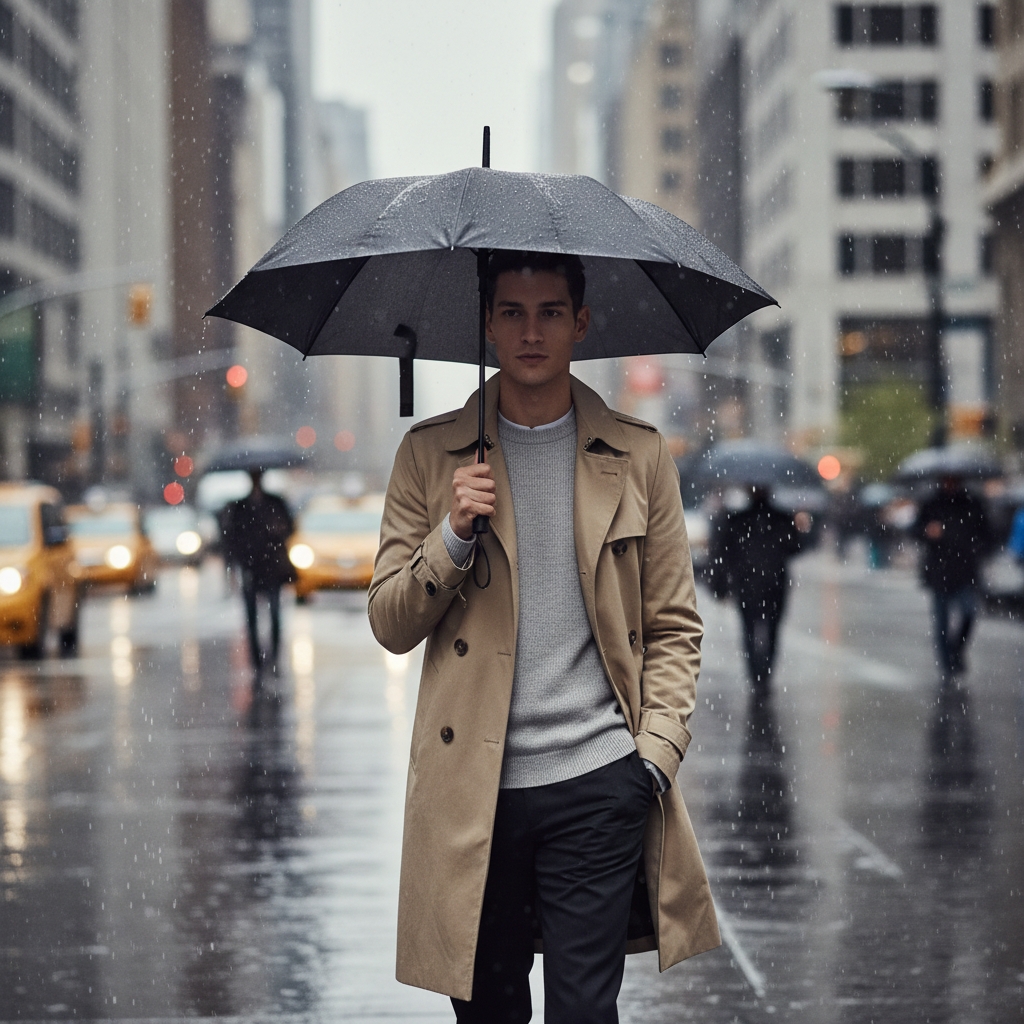
- Rain strategy: if it’s truly wet, prioritize function over aesthetics, a water-resistant shoe and a bag that can handle drizzle matter more than the “perfect” styling.
Step-by-step: build a trench outfit in 10 minutes
If you’re in a hurry, use this flow. It’s basic on purpose, and it keeps trench coat spring looks from getting overcomplicated.
- Step 1: pick your base, jeans and a tee, or trousers and a knit.
- Step 2: decide open vs tied. Open reads casual, tied reads sharper and warmer.
- Step 3: choose one focal point, shoes, bag, or a single accessory. Not all three.
- Step 4: check hem balance in the mirror, if the coat and pants both feel long, shorten one visually with a cuff or ankle-showing shoe.
- Step 5: do a movement test, sit, lift arms, walk a few steps. If it rides up or bunches, swap the under-layer.
Mistakes that make a trench look dated (and what to do instead)
A trench can read timeless or stuck in a specific decade, usually due to styling, not the coat itself.
- Too much “heritage” at once: trench plus fedora plus big scarf plus riding boots can feel like a costume, keep one nod and modernize the rest.
- All neutrals, no contrast: add contrast through texture, dark denim, a crisp white shirt, or a different neutral like navy.
- Ignoring the collar and lapels: if the collar sits awkwardly, steam it, a wrinkled lapel makes the whole outfit look tired.
- Wrong length with wrong shoe: mid-calf trench with mid-calf boots often chops the leg, try ankle boots, flats, or a sleeker boot shape.
When it’s worth getting professional help
If you consistently hate how your trench looks, the issue might be fit rather than styling. A tailor can shorten sleeves, adjust shoulder fit, or tweak belt placement, and those changes often make a bigger difference than buying another coat.
If you’re unsure what alterations are realistic for your fabric or construction, ask a tailor for options before committing. Many stores also offer basic hemming guidance, and a stylist can help if you want a small capsule plan rather than more random pieces.
Conclusion: keep the trench, change the formula
The best trench outfits usually follow a simple rule, let the coat be the structure, and keep everything underneath clean and wearable. Pick one classic formula, tweak shoes and textures, and you’ll get multiple trench coat spring looks without turning your morning into a project.
If you want a quick next step, choose one “default” combo for weekdays and one slightly elevated combo for weekends, then stick to them for a month and refine based on what you actually wear.
FAQ
What shoes go best with trench coat spring looks?
Loafers, ballet flats, clean sneakers, and ankle boots cover most spring situations. If the coat is long, sleeker shoes usually balance it better than chunky soles, but your comfort and walking time matter.
Should you belt a trench coat or wear it open?
Wear it open when you want a relaxed line and you like your base outfit. Belt it when it’s windy, you want more shape, or you’re dressing up. If buckling feels too formal, a loose tie knot reads modern.
How do I style a trench when it’s warm in the afternoon?
Use lighter under-layers like a tee, tank plus cardigan, or a breathable button-down. You can also choose cropped pants or a skirt to keep the outfit from feeling heavy once the coat comes off.
Are trench coats still in style in the US?
They tend to cycle in and out of “trend” conversations, but they stay relevant because they solve practical spring weather. Minor updates like relaxed denim, modern sneakers, or cleaner bags keep the look current.
What color trench coat is most versatile?
Beige/camel is the classic, but navy and black can be easier if your closet leans dark. If you wear a lot of warm neutrals, beige blends in; if you want contrast, navy can feel sharper.
How can I make a trench outfit look less boring?
Add one intentional contrast, a striped top, dark denim, a textured knit, or a standout shoe. Usually one strong element is enough, the trench already brings visual structure.
Can I wear a trench coat with athleisure?
Yes, as long as you keep the athleisure streamlined, think leggings plus a fitted top and clean sneakers. If everything is oversized, the trench may look like an afterthought instead of a styling choice.
If you’re building a small spring wardrobe and want trench coat spring looks that mix-and-match without guesswork, it can help to map 6–8 outfits around the same shoes and base layers, then use the trench as the “polish” piece when the weather turns unpredictable.