
best makeup bag for travel organizer choices come down to one thing: how fast you can pack, find what you need, and avoid leaks on the move.
If your current bag turns into a “lipstick graveyard” by day two, you’re not alone, most travel kits fail because they’re built like a pouch, not a system. A real organizer keeps liquids upright, separates tools from creams, and stops powders from cracking.
This guide breaks down what actually matters, layout, material, cleaning, and size, plus a quick checklist and a comparison table so you can pick a bag that fits your routine, not someone else’s.
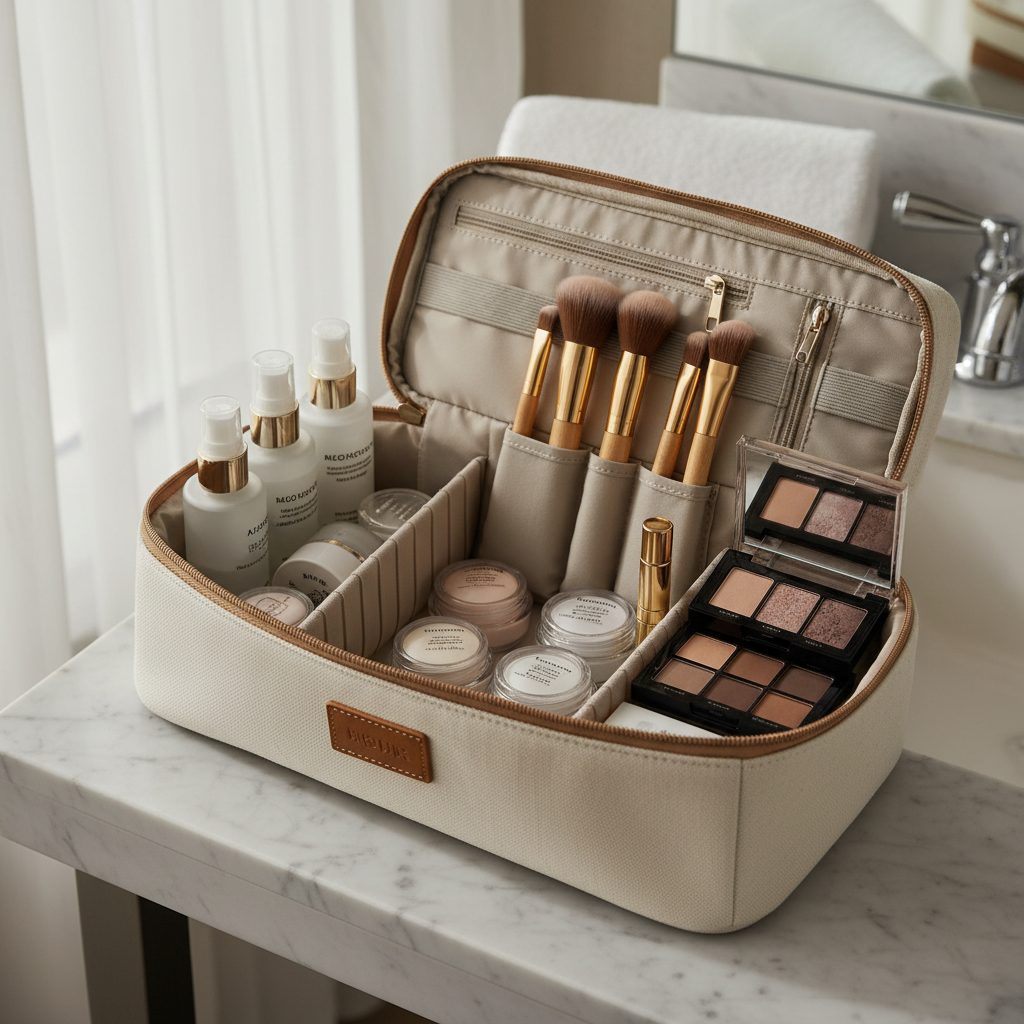
What “best” really means for a travel makeup organizer
There isn’t one universal winner, because travel needs vary by trip length, product types, and how you get there. What you want is a bag that matches your packing style and the way you actually do makeup.
- Weekend carry-on: compact footprint, quick access, minimal layers.
- 1–2 week trip: more structure, removable pouches, brush protection.
- Checked luggage: stronger walls, leak barriers, and crush resistance.
- Work travel: “grab-and-go” layout so you can set up at a sink fast.
Also, think in categories: liquids, powders, tools, and “messy” items like sunscreen or foundation. A good organizer keeps those from mixing.
Key features to look for (and why they matter in real life)
Most people shop by how cute the bag looks, then regret it in the TSA line or when a serum cap loosens. Here’s what tends to matter more than aesthetics.
1) Compartment design that matches your routine
- Adjustable dividers help if you bring a mix of tall bottles and small jars.
- Brush slots with a cover reduce bristle bending and keep powder off your skincare.
- Separate “wet zone” (zip pocket or clear pouch) helps contain leaks.
2) Materials that tolerate spills
- Wipe-clean lining (often TPU or coated fabric) saves you from deep cleaning after a foundation spill.
- Water-resistant exterior helps in bathrooms and near sinks.
- Sturdy zippers matter more than you’d think, travel is rough on teeth and pulls.
3) Shape and stability
A bag that collapses turns organizing into a two-hand job. Look for a base that sits flat and sides that hold their form, especially if you do makeup standing at a hotel sink.
According to TSA, liquids in carry-on must follow the 3-1-1 rule, so a travel organizer that includes a removable clear pouch can make screening smoother, even if it’s not strictly required for every traveler.
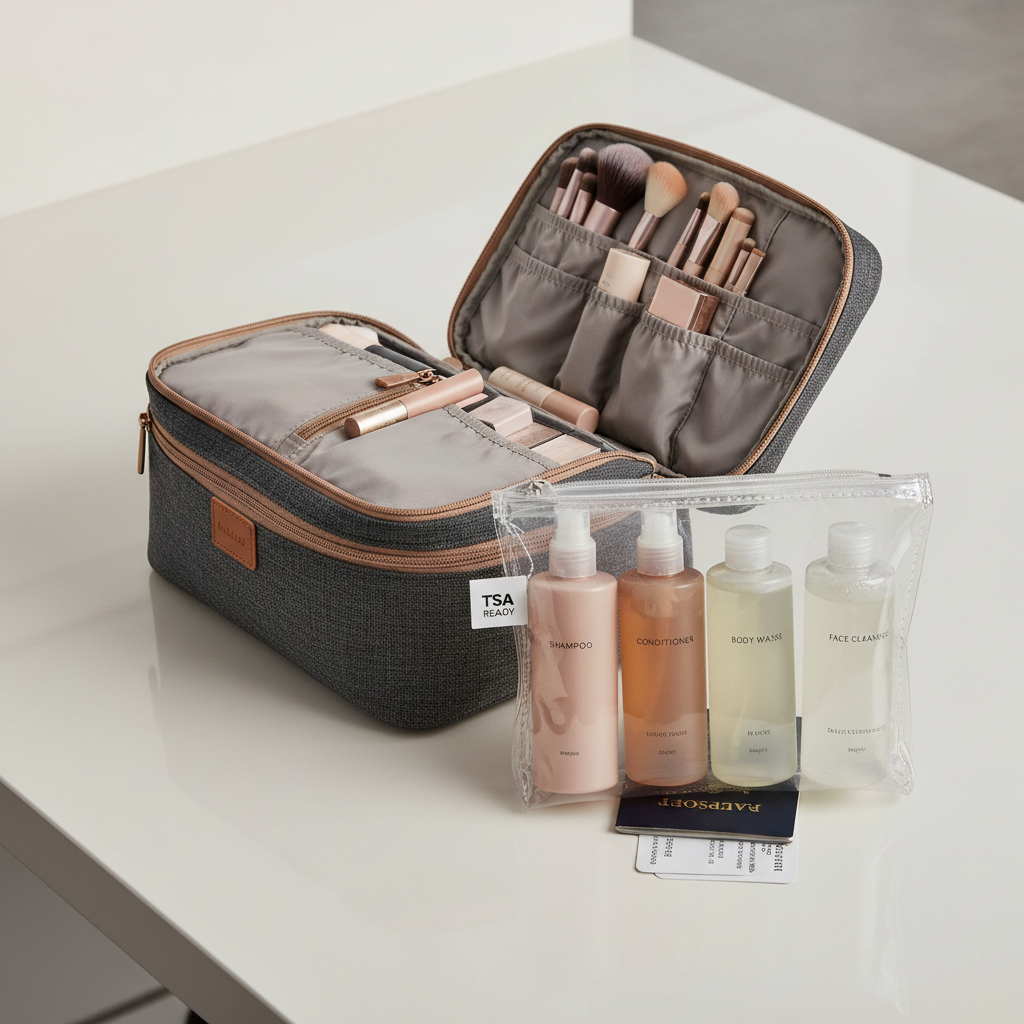
Quick comparison table: match your trip to the right bag type
Use this as a fast filter before you get lost in product listings and influencer photos.
| Organizer type | Best for | Pros | Watch-outs |
|---|---|---|---|
| Structured box with dividers | Skincare + makeup mix, longer trips | Great visibility, protects powders | Can take more space in carry-on |
| Hanging toiletry-style organizer | Small bathrooms, shared spaces | Easy setup, uses vertical space | Items can shift if not secured |
| Roll-up brush case + small pouch | Brush-heavy routines, artists | Brush protection, modular packing | Not ideal for bottles on its own |
| Clear cosmetics bag | Minimalists, quick security checks | Fast access, easy to spot leaks | Less protection, shows contents |
| Soft zip pouch | Short trips, low product count | Lightweight, flexible | Easy to become a clutter pile |
Self-check: are you buying the wrong organizer?
If you’re unsure what to pick, this quick self-check usually tells you where the friction is coming from.
- You dig for basics (mascara, concealer) every morning → you need fewer layers and better visibility.
- Powders crack in transit → you likely need a more rigid shell or tighter dividers.
- Caps loosen and everything smells like shampoo → prioritize a wet compartment and upright storage.
- Brushes get dusty or bent → look for brush slots with a flap, or a separate brush roll.
- You overpack “just in case” → pick a smaller organizer on purpose, capacity drives clutter.
If two or more of these hit home, you’re not really shopping for a “bag,” you’re shopping for a layout change.
How to pack a travel makeup organizer so it stays organized
Even the best makeup bag for travel organizer can turn chaotic if you pack by throwing everything in. A simple packing order keeps things stable and easier to find.
Step-by-step packing that holds up in transit
- Start with liquids: tighten caps, then place bottles upright in the wet zone; consider tape or a small leak-proof sleeve for high-risk items.
- Add creams and sticks: keep them away from powders to reduce mess if something softens in heat.
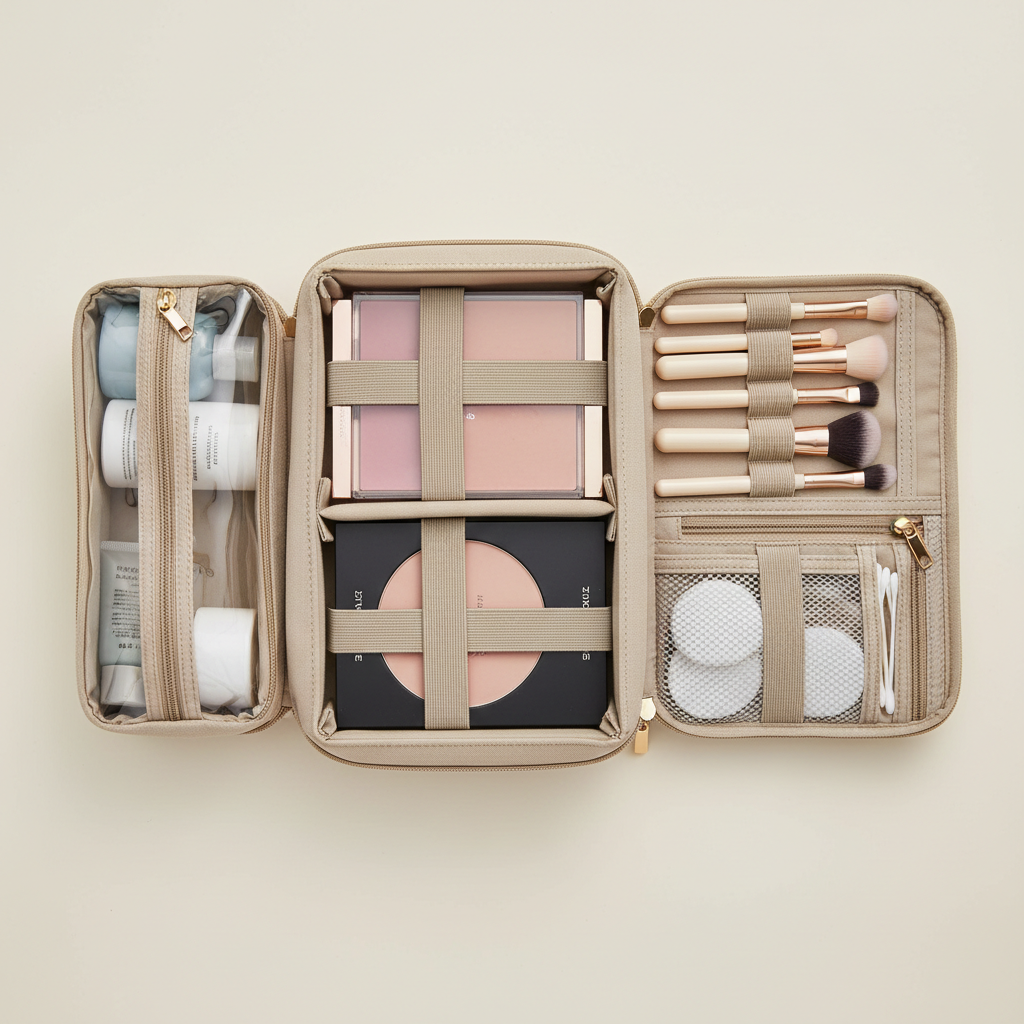
- Lock in powders: put palettes in the flattest, most protected area; if your organizer has a rigid panel, use it.
- Brushes last: store bristles up or protected, so they don’t rub against lids or zippers.
Two small habits that save a lot of cleanup
- Decant when it makes sense: travel sizes reduce weight and leak risk, but keep labels so you don’t mix up products.
- Do a 60-second reset each night: put items back in their zones, wipe obvious residue, you’ll feel it the next morning.
Mistakes to avoid (these waste money fast)
Some issues look minor online, then annoy you every single day on the road.
- Buying oversized “just in case”: you’ll fill it, and your bag gets heavier and messier.
- Too many tiny pockets: sounds organized, but it slows you down if you can’t see anything.
- No wipe-clean interior: fabric linings can absorb oils and stains, and that smell lingers.
- Weak zipper track: if the zipper fails mid-trip, everything else becomes a workaround.
- Ignoring heat: hot cars and sunny windows can melt balms and soften creams, so isolate “melt-prone” items.
If you’re traveling with anything that can irritate skin when spilled or mixed, consider keeping it in a separate sealed pouch; for sensitive skin or medical-grade skincare, it’s usually smart to ask a dermatologist what’s safe to decant.
Conclusion: picking the organizer you’ll actually use
The best choice is the organizer that reduces daily friction: you open it, everything has a place, and you can repack in minutes without thinking. For many people, that means a structured bag with dividers plus a removable clear liquids pouch, not the cutest zip pouch on the shelf.
Key takeaway: choose based on your product mix and your “mess risk,” then size down slightly so the organizer enforces good habits.
If you’re shopping today, write down your must-carry items in four groups (liquids, creams, powders, tools) and pick a layout that supports that list, not a bag that hopes you’ll change how you pack.
FAQ
- What size is ideal for a carry-on travel makeup organizer?
For most carry-on travelers, a compact structured organizer that fits upright in a personal item works well. If you routinely bring multiple liquids, prioritize a design that can hold a quart-size clear pouch without bulging. - Is a hanging organizer better than a flat makeup bag?
Hanging styles shine in tight bathrooms because you can see everything at once. If you tend to pack lots of powders or glass bottles, a flatter structured case may protect items better. - How do I prevent foundation or shampoo leaks in my makeup bag?
Tighten caps, store liquids upright, and isolate them in a wet compartment or separate sealed pouch. High-altitude flights can increase pressure changes, so extra containment is a practical move. - Can I bring my full-size makeup products when traveling?
You can in checked luggage, but carry-on liquids must comply with TSA rules. Many travelers decant into smaller containers to reduce leak risk and save space. - What materials are easiest to clean inside a makeup organizer?
Wipe-clean linings like TPU or coated polyester are typically simpler than uncoated fabric. If a listing doesn’t mention a wipeable interior, assume stains will be harder to remove. - Do makeup bags need to be clear for airport security?
Not always, but your liquids are expected to be in a clear quart-size bag for carry-on screening in the U.S. A travel organizer that includes a removable clear pouch can make compliance easier. - How many brushes should I pack for a trip?
Enough to cover your daily look without duplicates, often 3–6 brushes for a simple routine. If you’re bringing more, a separate brush roll keeps tools cleaner and easier to manage.
If you’re trying to stop spills, cut down morning rummaging, or build a simpler kit, it helps to choose an organizer based on your exact product list and your travel style, if you want, share what you pack (carry-on vs checked, liquids count, brush count) and I can suggest the organizer type that fits with less trial and error.