
How to fix dry cracked hands fast usually comes down to two things, stop whatever keeps stripping your skin, then rebuild your barrier with the right timing and texture of moisturizer.
If your hands feel tight, sting when you wash them, or split at the knuckles, you are not alone, and it is rarely just “not using enough lotion.” Weather, handwashing habits, sanitizers, and even the soap at work can push your skin past its limit, then small cracks start behaving like paper cuts.
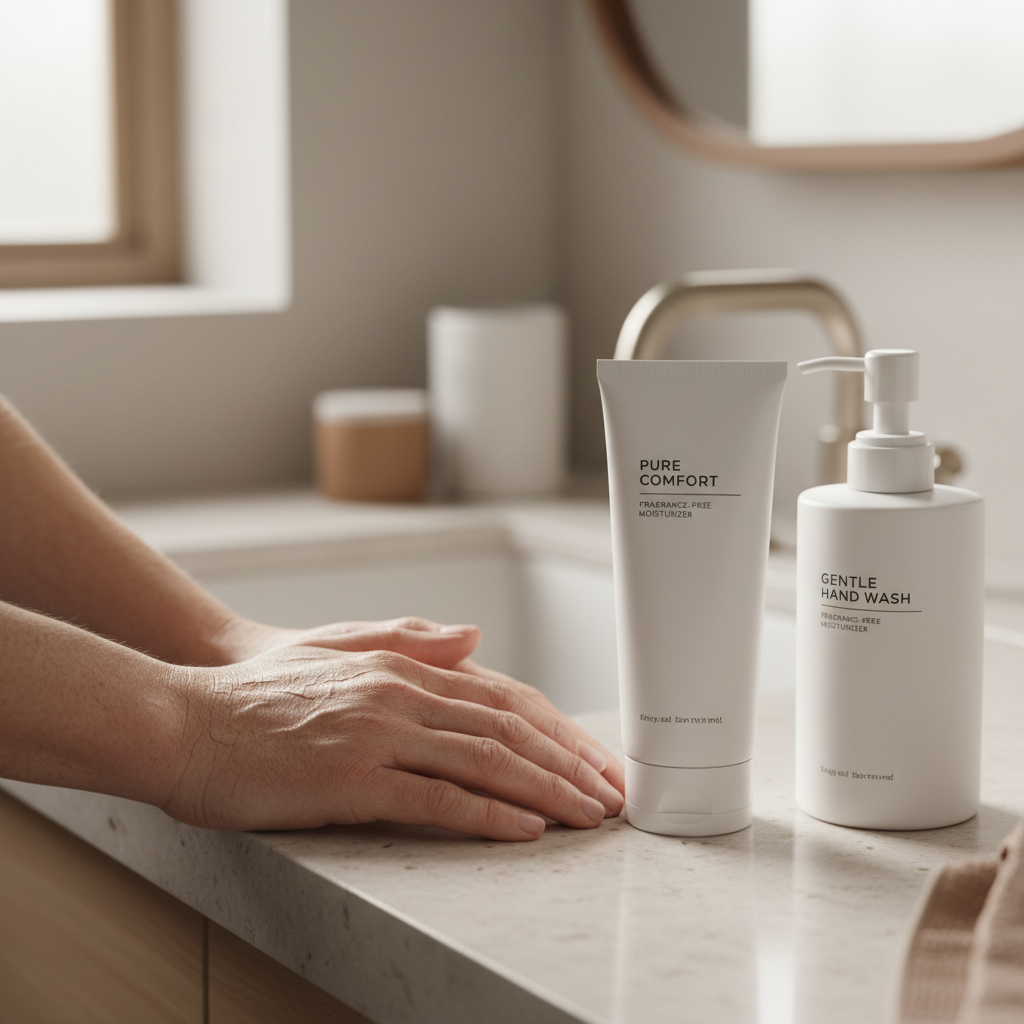
This guide focuses on what works in real life, quick relief in the first 24–48 hours, a simple routine you can stick with, and the moments when you should stop DIY and check with a clinician.
Why hands crack in the first place (so you stop chasing the wrong fix)
Most “fast fixes” fail because the trigger stays in place, you moisturize, then you immediately wash it off again. Dry, cracked hands often come from a damaged skin barrier, the outer layer that holds water in and irritants out.
- Frequent washing or sanitizing pulls oils out of the skin, and alcohol can sting once micro-cracks start.
- Harsh soaps and fragranced detergents can irritate, even if they smell clean.
- Cold weather and low humidity make water evaporate faster from skin, especially outdoors or in heated buildings.
- “Wet work” like dishwashing, cleaning, healthcare, and food service keeps hands cycling between wet and dry.
- Contact dermatitis, a reaction to an irritant or allergen, can look like dryness but behaves differently and keeps flaring.
- Skin conditions such as eczema or psoriasis can crack and bleed, and typically need more targeted care.
According to the American Academy of Dermatology, applying moisturizer right after washing, while skin is still slightly damp, helps lock in water and supports barrier repair.
Quick self-check: what kind of “cracked hands” are you dealing with?
You do not need a diagnosis to start better habits, but a quick sort helps you pick the right level of intensity.
Use this checklist
- Mostly dryness: tightness, mild flaking, worse after washing, improves with thick cream in 1–3 days.
- Fissures: visible splits, pain with movement, sometimes pinpoint bleeding, needs occlusion and protection.
- Irritant contact dermatitis: burning or stinging, redness, rough patches, worse with soaps/chemicals, repeated flares.
- Possible allergy: itchy rash, swelling, recurring in the same pattern after specific products or gloves.
- Possible infection: increasing redness, warmth, pus, honey-colored crust, or spreading tenderness.
If you see signs of infection, or if cracks are deep and not improving, it is safer to talk with a healthcare professional.
What to do in the next 10 minutes (the “fast” part)
If you want how to fix dry cracked hands fast, start with one reset that reduces irritation today, not next week.
Step-by-step reset
- Wash once, gently with lukewarm water and a fragrance-free cleanser, skip very hot water.
- Pat dry, leave a hint of dampness, do not rub.
- Apply a thick barrier product within 60 seconds, look for petrolatum, dimethicone, ceramides, glycerin, or colloidal oatmeal.
- Seal fissures with a thin layer of petrolatum on top, especially over splits.
- Cover with cotton gloves for 20–30 minutes if you can, or at least while you sit still.
That last step is boring, but it is often what turns “I moisturize all day” into actual improvement, because it prevents evaporation and friction.
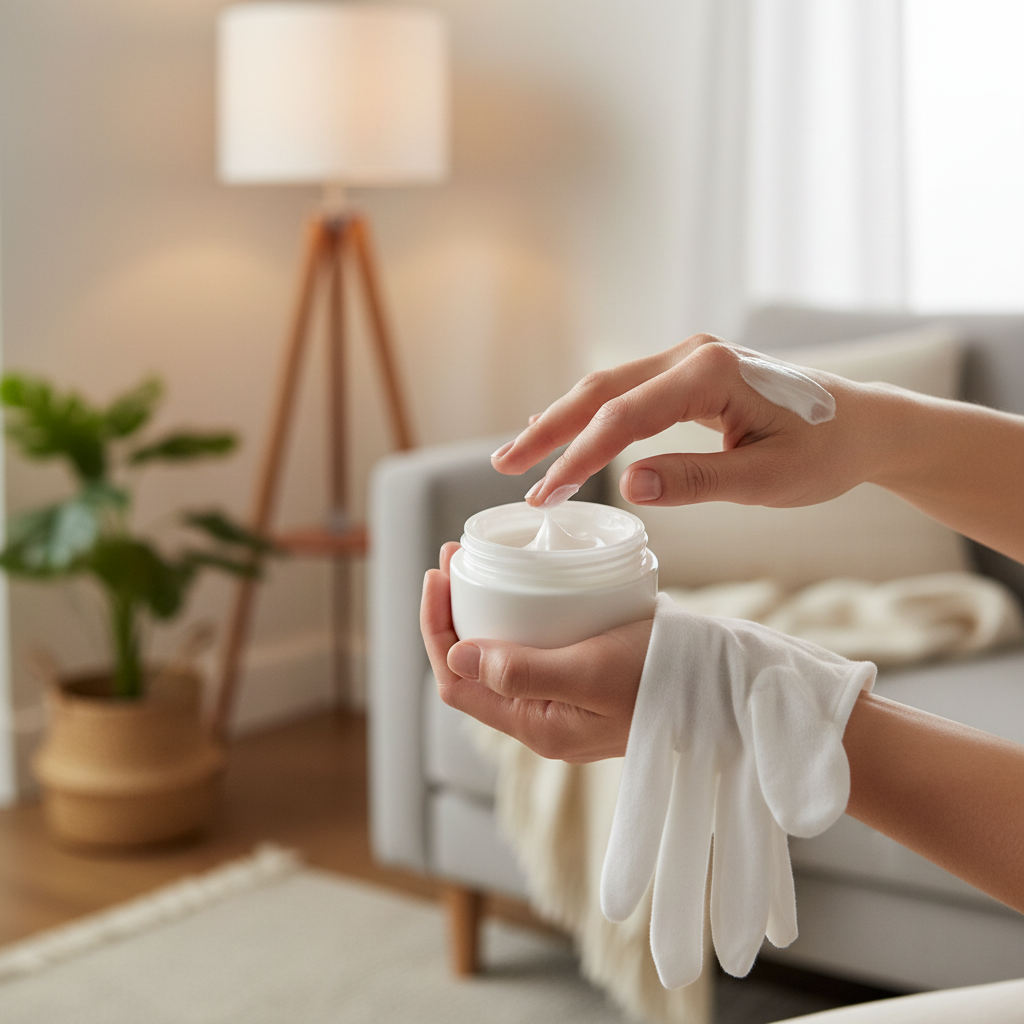
One caution, if cracks are actively bleeding, avoid products that sting heavily, many fragranced lotions and some acids can make you skip the routine altogether.
A simple 48-hour plan that usually improves comfort fast
This is the part most people can follow without turning hand care into a second job. The goal is fewer exposures, thicker protection, and better timing.
Daytime routine (work-friendly)
- After every wash: apply a fast-absorbing barrier cream, not a thin lotion, keep one by each sink.
- Before sanitizer: if allowed, apply a light barrier cream first, then sanitize once it absorbs, this can reduce sting for some people.
- For chores: wear nitrile gloves with a cotton liner for dishwashing and cleaning, trapped moisture alone can irritate, so liners matter.
- Target the splits: dab petrolatum on the worst fissures mid-day, even if you do not re-cream your whole hand.
Night routine (where most healing happens)
- Apply a thick ointment or balm generously, including knuckles and fingertips.
- Use cotton gloves overnight, or at least for an hour while winding down.
- If itching keeps you awake, a clinician may suggest an anti-inflammatory option, do not self-treat with random steroid mixes.
According to the National Eczema Association, consistent moisturization and trigger avoidance are core strategies for managing hand eczema and barrier disruption.
Choose products that match your situation (a quick table)
Product choice matters less than consistency, but the wrong texture at the wrong time causes a lot of “nothing works” frustration.
| Situation | What to use | What to avoid (often) |
|---|---|---|
| Dryness, mild flaking | Thick cream with ceramides, glycerin, or dimethicone | Strong fragrance, frequent exfoliating acids |
| Painful cracks (fissures) | Petrolatum ointment as top layer, cotton gloves at night | Alcohol-heavy products on open splits |
| Red, irritated, stinging | Fragrance-free, minimal-ingredient barrier cream, colloidal oatmeal can help | Essential oils, heavily scented lotions, harsh antibacterial soaps |
| Frequent wet work | Barrier cream + glove strategy, reapply after glove removal | Wearing occlusive gloves for long periods without breaks |
| Recurring patches, possible eczema | Moisturizer + professional guidance, sometimes prescription anti-inflammatory treatment | Assuming it is “just dry skin” for months |
Habits that speed healing more than buying a new cream
If you keep re-injuring the skin barrier, even the most expensive product struggles. These are small shifts that tend to pay off quickly.
- Switch soap, not just lotion: use a gentle, fragrance-free cleanser, and keep it consistent at home.
- Use lukewarm water: hot water feels good, but it strips more.
- Keep a “hand kit”: one cream in your bag, one at your desk, one by the kitchen sink, friction matters less when reapplication is easy.
- Dry carefully: pat, do not scrub with rough paper towels.
- Gloves for cold: outdoor air and wind can crack skin fast, especially on commutes.
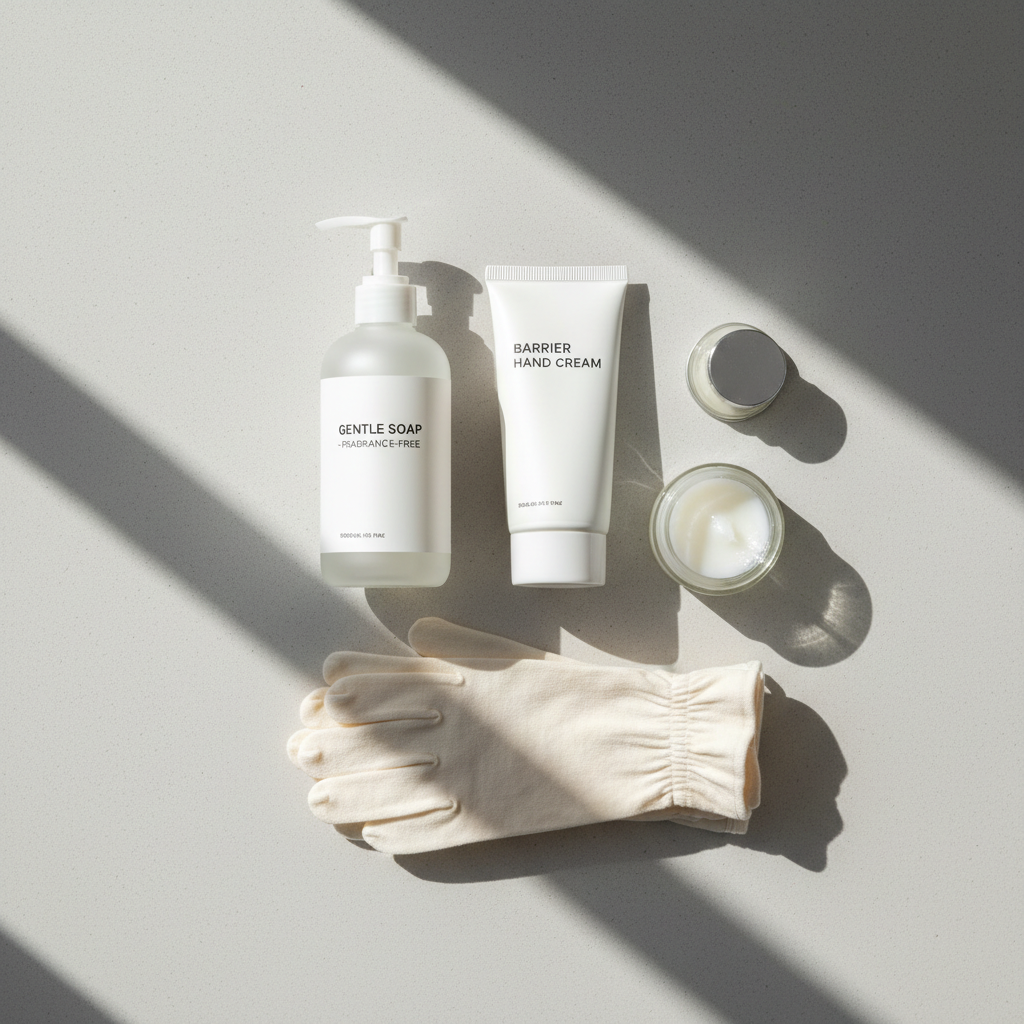
One more thing people miss, rings can trap soap and moisture, if the skin under a ring stays irritated, try removing it during washing and drying fully.
Common mistakes that keep dry, cracked hands stuck
- Using thin lotion and calling it done: lotions evaporate fast, you often need a cream or ointment while cracks heal.
- Only moisturizing once a day: for active cracking, timing after washing matters more than a single big application.
- Over-sanitizing: sometimes you can swap one wash for sanitizer, but if sanitizer burns badly, talk with your workplace about gentler protocols that still meet hygiene rules.
- Trying harsh “peeling” fixes: scrubs and strong acids can worsen fissures.
- Ignoring glove strategy: cleaning without gloves is like washing your moisturizer off on purpose.
Key takeaway: faster results usually come from fewer exposures plus heavier protection, not from constantly switching products.
When to get professional help (and what to ask about)
DIY works for many cases, but there are clear moments to escalate, especially if pain or bleeding affects work.
- Cracks that keep bleeding or do not improve after 7–10 days of consistent barrier care
- Signs of infection such as swelling, pus, spreading redness, fever, or worsening warmth
- Severe itch, thick plaques, or frequent relapses that suggest eczema, psoriasis, or an allergy
- You suspect a workplace trigger, a clinician can discuss irritant avoidance and, when appropriate, patch testing
According to the Centers for Disease Control and Prevention, hand hygiene remains important, but skin damage can increase discomfort and reduce compliance, if your hands are severely irritated, a clinician can help you balance hygiene and skin protection.
Practical “do this next” checklist
- Replace harsh soap with a gentle, fragrance-free cleanser
- Keep a thick barrier cream at every sink, apply right after washing
- Use petrolatum on fissures, then cotton gloves at night
- Wear gloves for cleaning and cold weather, take breaks if hands get sweaty
- If you need how to fix dry cracked hands fast for an event or job, start the routine today, not the night before
Most people notice less sting and tighter cracks within a couple days when the routine is consistent, if you are not seeing any movement, that is usually a sign the trigger is still active or something like dermatitis needs a different approach.
Conclusion: comfortable hands are usually a systems problem, not a willpower problem
If you came here for how to fix dry cracked hands fast, the honest answer is you can often feel improvement quickly, but the real win comes from stopping the repeat damage, then making barrier care automatic after every wash.
Pick two actions you will actually do, keep a thick cream at your main sink, and commit to an overnight glove routine for three nights, if cracks still split or look inflamed, consider checking in with a dermatologist or primary care clinician.