
men sunglasses polarized uv searches usually come from one practical problem: you want less glare and real UV protection, but product pages mix those terms like they mean the same thing.
They don’t. Polarization is about glare control, UV protection is about blocking ultraviolet radiation, and you can buy sunglasses that do one without properly doing the other. That’s why guys end up with “polarized” shades that feel comfortable in the moment, yet still fall short on eye safety.

This guide breaks down what to look for on labels, how lens color and coatings change the experience, and a quick checklist to help you buy with confidence, whether you drive a lot, fish, play golf, or just want an everyday pair.
Polarized vs. UV Protection: the quick, honest difference
Polarized lenses include a filter that cuts horizontal glare, the kind that bounces off roads, water, hoods, and windows. That’s why they feel “calmer” on a bright day, especially when you’re behind the wheel.
UV protection is different: it blocks UVA and UVB rays that can contribute to long-term eye issues and skin damage around the eyelids. According to the American Academy of Ophthalmology, sunglasses should block 99% to 100% of UVA and UVB to help protect your eyes.
One more nuance: darkness isn’t protection. A very dark lens without adequate UV filtering can be a bad deal, because your pupils may dilate behind the tint, potentially letting more UV reach the eye if the lens doesn’t block it well.
What to look for on the label (and what to ignore)
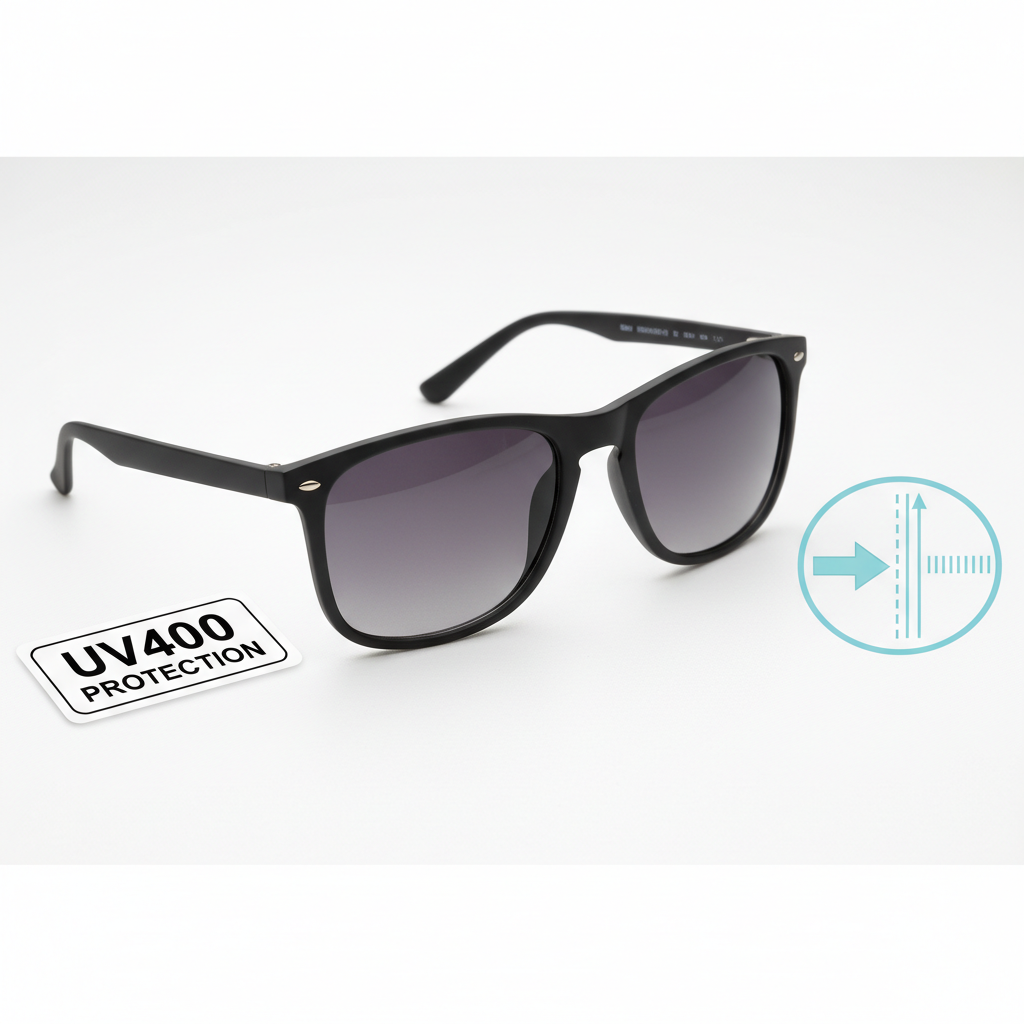
If you only remember one thing, remember this: look for “UV400” or “100% UVA/UVB protection”. Those are the phrases that typically indicate real ultraviolet blocking.
- Good signs: “UV400,” “100% UVA/UVB,” “Blocks UVA and UVB to 400 nm.”
- Also helpful: “Polarized” (for glare), “ANSI Z80.3” (common US standard language you may see).
- Not enough on its own: “Polarized” with no UV claim, “Fashion tint,” “Blue light” marketing.
When shopping online, don’t be shy about checking the product Q&A or contacting the seller if the UV wording is missing. If they can’t say it clearly, that’s usually your answer.
A practical comparison table: pick what matches your use
Different activities reward different lens features. Here’s a simple way to map use cases to lens specs without overthinking it.
| Use case | Polarization | UV protection | Lens color (common picks) | Notes |
|---|---|---|---|---|
| Driving (daytime) | Strongly recommended | UV400 / 100% UVA/UVB | Gray, brown | Helps reduce road/windshield glare; check dashboard readability |
| Fishing / boating | Recommended | UV400 / 100% UVA/UVB | Gray, copper/amber | Glare off water is intense; wraparound frames often feel better |
| Golf / outdoor sports | Often helpful | UV400 / 100% UVA/UVB | Brown, rose, copper | Contrast can matter more than darkness; fit stability is key |
| City walking / everyday | Nice to have | UV400 / 100% UVA/UVB | Gray, green, brown | Prioritize comfort, coverage, and consistent UV labeling |
| Snow / high altitude | Often recommended | UV400 / 100% UVA/UVB | Gray, brown | UV exposure can be higher; consider more coverage and side shielding |
If you’re stuck between two pairs, pick the one with clearer UV claims and better coverage. Polarization can be added, but you can’t “wish” UV protection into a lens after purchase.
Quick self-check: do you actually need polarized lenses?
Polarization feels amazing in the right situations, and unnecessary in others. This checklist helps you decide fast.
- You drive daily in bright sun, especially on highways or wide open roads
- You spend time near water, sand, snow, or large glass buildings
- You often squint even with regular tinted sunglasses
- You dislike the “sparkle” and harsh reflections on pavement
If most of those are “yes,” polarized makes sense. If you’re mostly indoors and just want basic outdoor coverage, prioritize UV protection and comfort first.
One more real-world caveat: polarization can make some LCD screens look dim or rainbowed at certain angles. That includes car displays, pumps, ATMs, and phones. Many people live with it, some find it annoying.
How to choose men’s polarized sunglasses with UV protection (step-by-step)
This is the buying flow that prevents regret and keeps you focused on what matters.
1) Lock in UV protection before anything else
Look for UV400 or 100% UVA/UVB protection. If you can’t verify it, skip the pair, even if the frame looks perfect.
2) Decide your glare strategy: polarized or not
For driving, water, and open sun, polarization is usually a strong upgrade. For occasional wear, you may prefer non-polarized to avoid screen issues.
3) Pick a lens color based on comfort, not hype
- Gray: neutral color perception, easy everyday choice
- Brown/amber: boosts contrast, often feels comfortable in variable light
- Green: balanced option, can feel less harsh for long wear
4) Fit and coverage matter more than most people admit
Frames that sit too far from your face leak light from the sides and top. A slightly more wrapped shape often feels better in strong sun, especially on water or during long drives.
5) Don’t sleep on lens quality and coatings
An anti-reflective back coating can reduce reflections bouncing into your eye from behind the lens. Scratch resistance and oil-resistant coatings can be worth it if you’re rough on gear.
Common mistakes (these are easy to make)
- Assuming “polarized” means UV-safe: polarization does not guarantee UV blocking.
- Buying extra-dark lenses for “more protection”: tint is not UV protection, and very dark lenses can reduce visibility in shade.
- Ignoring frame fit: the best lens won’t help much if light floods in from the sides.
- Overpaying for buzzwords: “HD,” “clarity,” and similar terms can be vague; look for concrete UV labeling.
According to the U.S. Food and Drug Administration (FDA), sunglasses are regulated as medical devices in the U.S., and labeling matters. Still, quality varies, so sticking to clear UV claims is a practical safeguard.
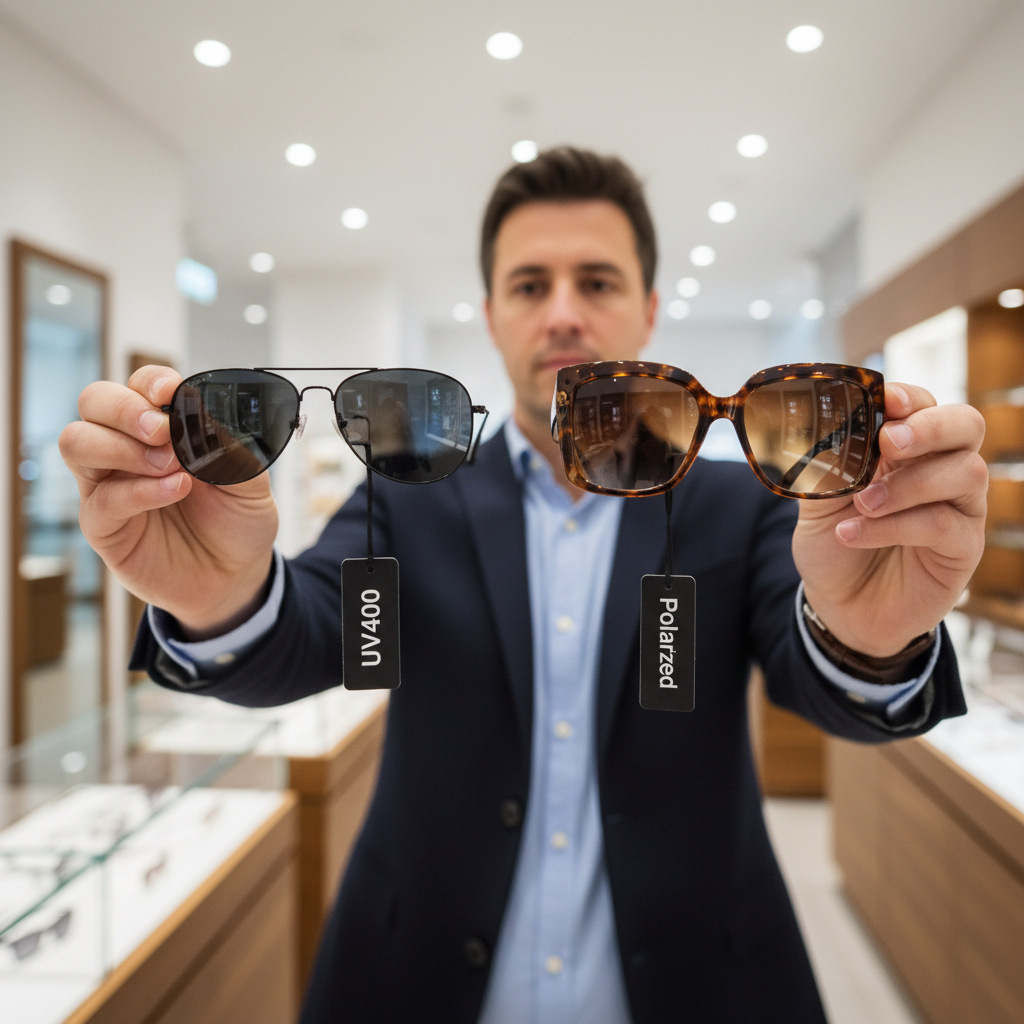
Key takeaways: UV protection is non-negotiable, polarization is situational, and fit is the quiet factor that decides whether you’ll actually wear them.
When to consider professional help
If you have eye conditions, light sensitivity, recent eye surgery, or you notice headaches or visual distortion with new lenses, it’s smart to ask an eye care professional. Some symptoms may be unrelated to sunglasses, and getting personalized advice can save time and discomfort.
Also consider prescription sunglasses if you already wear corrective lenses. Layering cheap shades over glasses often compromises coverage and comfort, and you end up leaving them in the car.
Conclusion: what to buy, in plain English
For most guys, a solid everyday pick is UV400 (or 100% UVA/UVB) plus polarization, in a comfortable frame that blocks side light reasonably well. If screens are a big part of your day, you might choose non-polarized but keep UV protection as the baseline requirement.
Your next step can be simple: check the label language on your current pair, then decide if glare is still your main pain point. If it is, upgrade to polarized, but only when the UV claim is clear.
FAQ
Do polarized sunglasses automatically block UV?
No. Polarization reduces glare, but UV protection depends on the lens material and treatment. Look specifically for UV400 or 100% UVA/UVB wording.
Is UV400 the same as 100% UVA/UVB protection?
They’re commonly used to communicate the same goal: blocking UVA and UVB up to 400 nm. If a brand states either clearly, that’s usually a good sign.
Are darker lenses safer for your eyes?
Not necessarily. Dark tint can feel comfortable, but safety comes from UV filtering. Very dark lenses without proper UV protection may be a poor choice.
What lens color is best for men’s polarized sunglasses with UV protection?
There isn’t one perfect color. Gray stays neutral, brown/amber often improves contrast, and green can feel balanced. Pick based on where you use them most.
Are polarized lenses good for night driving?
Usually not. Sunglasses at night can reduce visibility, and polarization doesn’t solve that. If you have night vision concerns, consider speaking with an eye care professional.
Why do polarized sunglasses make my phone or car screen look weird?
Some screens use polarization themselves, so the lens filter can interfere at certain angles. Rotating the screen or changing angle often helps, but if it bothers you daily, consider non-polarized UV400 lenses.
How can I tell if my sunglasses are truly UV-protective?
Start with labeling, then buy from reputable sellers. For extra certainty, some optical shops can test UV transmission, which is helpful if you’re unsure about an unbranded pair.
If you’re shopping for men sunglasses polarized uv options and want a quicker shortlist, focus on pairs that state UV400/100% UVA/UVB in plain language, then choose polarization and lens color based on how you actually spend time outdoors.