
Cropped cardigan for dresses is one of those wardrobe shortcuts that can look effortlessly polished, until it feels boxy, rides up, or competes with the dress instead of finishing it. The good news is, most of those issues come down to fabric weight, hem placement, and sleeve shape, not “having the wrong body type.”
If you wear dresses to work, weddings, church, travel, or just because they’re easy, a lightweight cropped layer solves two real problems: temperature swings and “I want a little coverage but not a whole jacket.” Done right, it keeps the dress as the main character and still reads intentional.
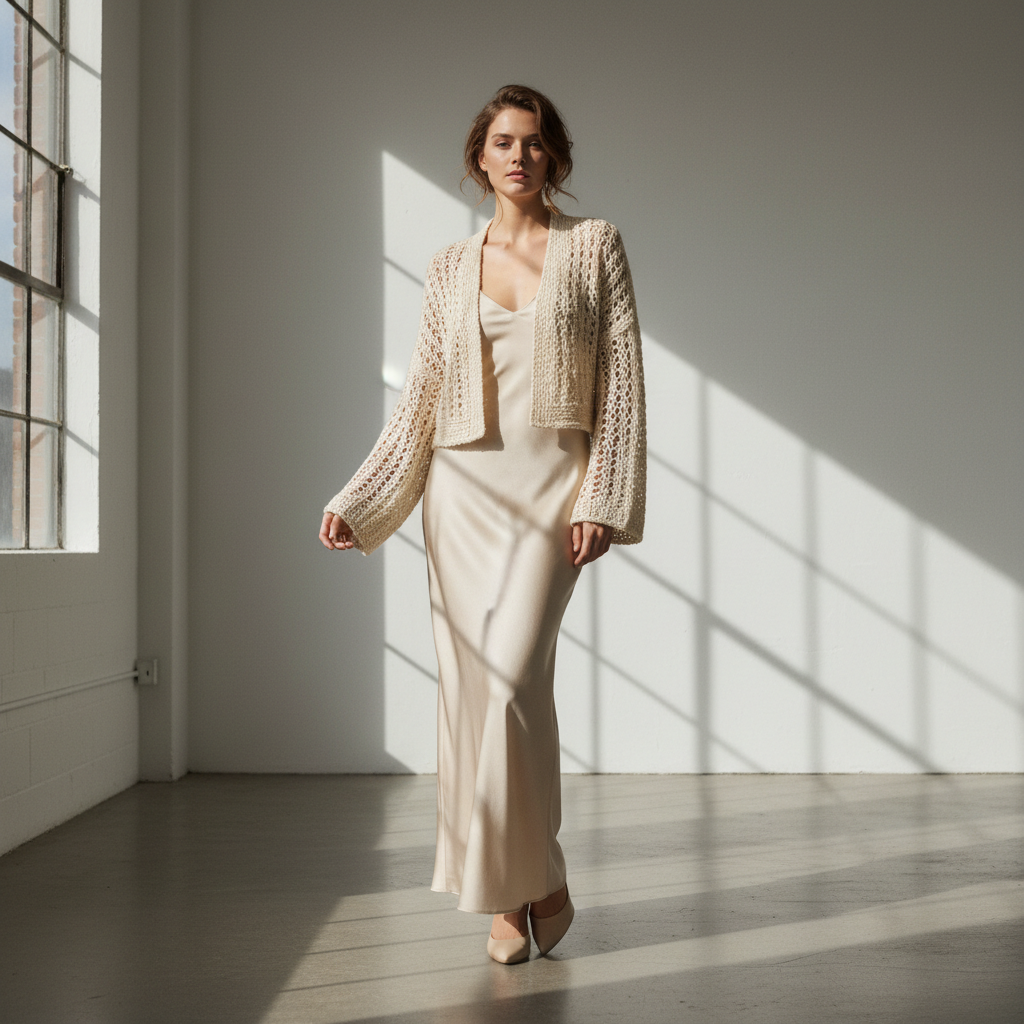
This guide walks through what “lightweight” actually means, how to match a cropped hem to different dress silhouettes, and a few reliable outfit formulas you can repeat without overthinking.
Why lightweight cropped cardigans work so well with dresses
A cropped layer changes proportions fast, which is why it can feel magic one day and awkward the next. In real closets, these are the reasons it usually works when you pick the right one.
- It defines the waist without a belt. A short hem visually “frames” the narrowest point, especially with fit-and-flare and wrap dresses.
- It avoids bunching at the hip. Longer cardigans often snag on pockets, ruching, or skirt volume, lightweight cropped versions sidestep that.
- It’s a comfort layer, not a second outfit. Thin knits and airy weaves add warmth in AC without making you feel layered up.
- It photographs cleanly. For events, a cropped shape keeps the dress line readable, which matters more than people admit.
According to NOAA, indoor and outdoor temperature differences can be significant depending on season and region, which is why having a packable, light layer often makes daily outfits more practical.
Quick self-check: what kind of dress are you styling?
Before shopping (or blaming your closet), identify the dress silhouette and where you want the cardigan hem to land. This alone fixes most “why does it look off?” moments.
Use this fast checklist
- Dress waistline: natural waist, empire, or no defined waist
- Skirt volume: pencil/slim, A-line, or full/pleated
- Straps/neckline: sleeveless, spaghetti straps, V-neck, crew, off-shoulder
- Fabric vibe: casual knit, crisp cotton, satin, lace, or jersey
- Where you want coverage: arms only, bust/upper back, or full torso warmth
If the dress has a clear waist seam, your cropped cardigan usually looks best ending at the waist seam or 1–2 inches above. If there’s no waist seam, aim for the narrowest point of your torso (often just above the belly button).
Fabric and weight: what “lightweight” should mean in real life
“Lightweight” gets used loosely in product listings. If you want a cropped cardigan for dresses that drapes cleanly, you’re really choosing structure vs. softness and how breathable it feels on skin.
- Cotton blends: breathable, easy, good for casual dresses, may wrinkle a bit depending on knit.
- Viscose/rayon blends: smoother drape, feels cool, can snag if delicate, great for dressy looks.
- Modal/Tencel blends: soft and fluid, comfortable for travel, often looks more “lounge” unless styling is crisp.
- Merino (light gauge): refined and temperature-regulating, can be pricier, nice for office wear.
- Open-knit or pointelle: airy and pretty, but offers less warmth and may read more casual/boho.
A small but practical tip: if you want it for events or office, avoid overly “fluffy” yarns, they can add volume at the bust and shoulders, even when the cardigan is technically short.
Hem length and sleeve shape: the fit details that change everything
Most people think the secret is color matching. Fit matters more. When the proportions are right, even a simple neutral layer looks intentional.
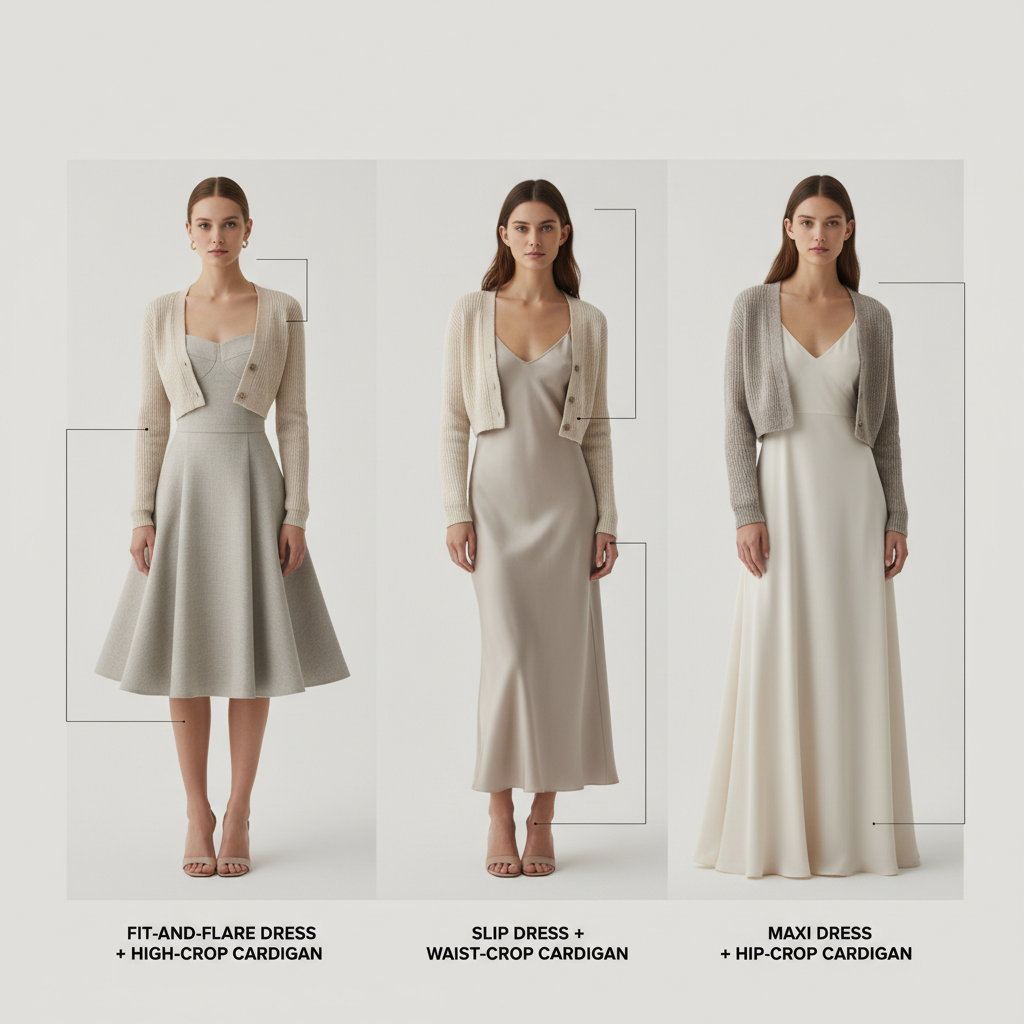
Hem placement rules that usually hold up
- Fit-and-flare dresses: true cropped (at waist) keeps the hourglass effect.
- Bodycon or slip dresses: slightly longer cropped (top of hip) can feel more balanced and less “cut off.”
- Maxi dresses: a cropped hem is often better than mid-thigh, because it prevents a long column from looking heavy on top.
- Empire waist dresses: choose a cardigan that hits right under the bust or at the high waist seam, not mid-torso.
Sleeves and shoulders (quiet but important)
- Set-in sleeves look sharper for work and events, especially with structured dresses.
- Drop shoulders feel relaxed, but can look slouchy over dressy fabrics like satin.
- 3/4 sleeves often flatter and keep bracelets/watches visible, also help avoid bunching at the elbow.
If the cardigan keeps sliding back, check the shoulder width. Many “one-size-ish” crops are cut wide, so they shift as you move. Sizing down can help more than adding fashion tape.
Outfit formulas you can repeat (and not get bored)
When you want easy wins, use a formula and vary shoes or jewelry. Below are combinations that tend to work across many body shapes and dress types.
3 reliable formulas
- Monochrome base + lighter layer: navy dress + ivory cardigan, black dress + soft gray. Reads clean and elongating.
- Print dress + solid cardigan pulled from the print: choose a color already inside the pattern so it looks “meant to be.”
- Dressy dress + refined knit: slip or satin dress + fine-gauge cardigan + minimal jewelry for weddings or dinners.
Quick table: match the cardigan to the occasion
| Occasion | Best cardigan style | What to avoid |
|---|---|---|
| Office / meetings | Fine-gauge knit, set-in sleeve, minimal texture | Chunky yarns, extra-long sleeves that bunch |
| Wedding guest | Short, smooth drape, subtle sheen or delicate knit | Overly casual hooded crops, heavy ribbing |
| Travel | Soft, packable knit, wrinkle-friendly blend | High-maintenance fabrics that snag easily |
| Summer evenings | Open-knit or breathable cotton blend | Thick acrylic that traps heat |
Practical styling steps (so it stops looking “thrown on”)
Here’s the part people skip: tiny styling choices keep a cropped cardigan from looking like you grabbed it because you were cold.
- Decide open vs. closed. If the dress has detail at the waist, wear the cardigan open so you don’t hide it.
- Use one anchor point. A delicate necklace, a belt, or statement earrings makes the layer feel planned.
- Mind the hemline “break.” If the cardigan ends at the widest part of your torso, it can look abrupt, adjust by choosing a slightly shorter crop.
- Balance volume. Full skirt dress pairs better with a slimmer cardigan, slim dress can handle a slightly roomier crop.
- Check the back view. A cardigan that looks fine in front can bunch at the lower back, a quick mirror check saves you later photos.
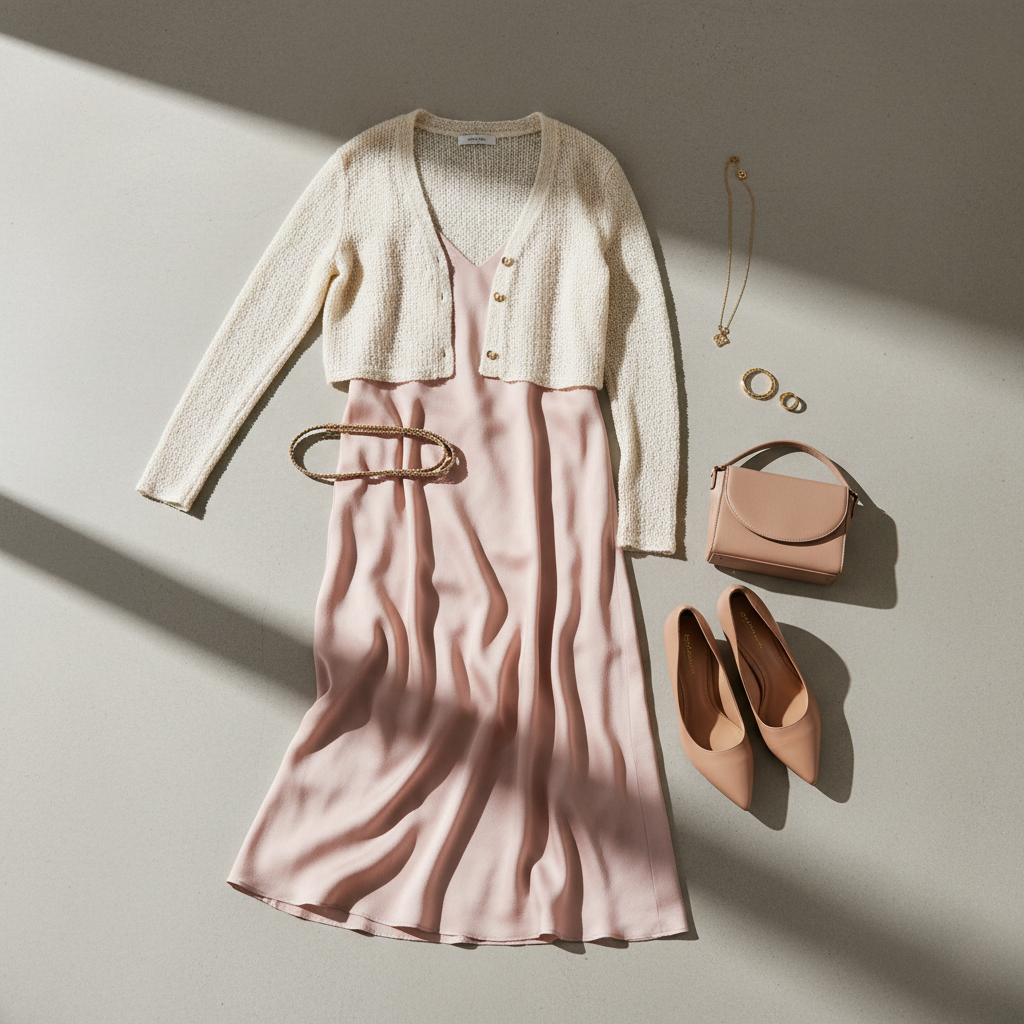
Key takeaways: pick a hem that hits at the waist seam when possible, keep fabric light and smooth for dressier moments, and treat accessories as the “intentional” signal.
Common mistakes (and what to do instead)
- Mistake: Matching the cardigan to shoes every time. It can look overly coordinated. Try matching to a secondary color in the dress or your bag.
- Mistake: Going too long “for coverage.” A longer cardigan can fight the dress silhouette. If you want more coverage, consider a lightweight wrap or blazer-style knit.
- Mistake: Choosing stiff hems. Tight ribbing at the bottom can ride up. Look for a softer hem finish or a slightly looser band.
- Mistake: Ignoring underlayers. If the dress is clingy, a smoother base layer or slip can prevent the cardigan from catching and shifting.
According to FTC, shoppers should look closely at fiber content and care labels to understand what they’re buying, especially when online product photos make fabric weight hard to judge.
When it makes sense to get tailored help or ask a stylist
If every cropped option feels like it sits wrong, it may not be you, it may be the pattern proportions. A tailor can sometimes adjust sleeve length, add a discreet hook-and-eye, or slightly refine the hem, but not every knit is alterable without distortion.
If you need a look for a wedding, work event, or family photos and you’re stressed about it, a stylist or experienced boutique associate can help you narrow choices quickly. Bring the dress, shoes, and the bra you’ll actually wear, that’s where most “surprises” come from.
Conclusion: the simplest way to choose your next one
A cropped cardigan for dresses works best when the hem lines up with the dress structure and the knit feels light enough to drape, not fight. Start with one neutral you truly like on your skin, then add a second piece in a color you can pull from printed dresses.
If you want a fast next step, pick one dress you wear often, take two mirror photos with different hem placements, and use that as your baseline before buying anything else.
FAQ
What length should a cropped cardigan be with a midi dress?
Most of the time, a hem that hits at the natural waist or slightly above looks balanced with a midi. If the dress has no waist seam, aim for the narrowest point of your torso so the outfit doesn’t look visually “cut” at the widest area.
Can I wear a cropped cardigan over a formal dress?
Usually yes, if the cardigan fabric looks refined. Fine-gauge knits, smooth drape, and minimal texture tend to read dressier than chunky ribs or fuzzy yarns, which can make the look feel casual.
How do I keep a cropped cardigan from riding up?
Riding up often comes from tight bottom ribbing or shoulders that are too wide. Try sizing down, choosing a softer hem finish, or wearing it open so it isn’t pulling across the bust.
What color cropped cardigan goes with most dresses?
In many wardrobes, ivory, soft gray, and navy earn their keep because they pair with both prints and solids. Black is versatile too, but it can look harsh with light summer florals unless you repeat black in shoes or a bag.
Is a bolero the same as a cropped cardigan?
They overlap, but a bolero is often shorter and more structured, sometimes meant for formal wear. A cropped cardigan usually has a more casual knit feel and can be worn as an everyday layer.
What’s the best lightweight fabric for hot weather?
Cotton blends and open-knit styles often feel more breathable. If you run hot easily or have skin sensitivity, checking fiber content and choosing a softer knit can make a noticeable comfort difference.
What should I do if my dress straps keep slipping under the cardigan?
Look for a cardigan with a slightly narrower neckline or better shoulder fit. In a pinch, fashion tape can help, but if it’s a frequent issue, the more reliable fix is a different shoulder shape or strap-friendly bra setup.
If you’re trying to build a small “dress layering” capsule and want it to feel effortless, focus on one lightweight cropped silhouette that fits your most-worn dresses, then add a second option for dressier occasions so you’re not forcing the same piece into every scenario.